Tag Archive for: Ignite PR & Marketing

PR’s role in modern day franchising

CEO Champions: boosting visibility of senior leaders

CEO Champions: boosting visibility of senior leaders

Franchising and small business is a pretty dynamic sector of Australia’s economy, and that’s why we’re pretty excited to hear our clients speak of increases in consumer confidence. It means franchisors can start investing more in communications, to explore new ways to cut through the diverse and ever-changing media landscape.

While we’ve been exploring the following elements with our clients over the past few years, here are our thoughts on some trends we believe are shaping PR’s new role in modern day franchising in Australia.

  • Storytelling – Beyond boasting average sales growth or profit margins across the network, the prospective pool of candidates wants to know who your successful franchisees are, how long they’ve been with you, why they are successful and what skills they came with. These stories are far stronger than your product, and PR people will unearth those that are strongest separating your proposition from that of your competitors.
  • CEO Visibility – The very best franchise leaders will be those who dedicate time to helping PR succeed. This might mean making themselves available to offer industry business insights, or validating why their organisation supports its chosen causes. The leadership communicated to stakeholders through high CEO visibility, as we like to call it, also proves invaluable in attracting new franchise recruits, because passion attracts passion.
  • Visual Communication – While the press release is far from ‘dead’ in Australia, the point is brands using interesting and engaging multimedia such as videos and infographics are ahead of the rest. There’s more to media than printed news stories, and modern day PRs are multi-skilled with the ability to put together a video, from scripting to filming, editing and distribution with the same strategic thinking.
  • Thought Leadership – Leading franchisors have the unique opportunity to establish thought leadership in their respective industry. The right communications professionals have a strong understanding of what makes media tick, allowing them to create the thought leadership on your behalf.
  • Social Media – You may have a social presence, but it’s not merely enough. If your social activity doesn’t include strategies for energising and engaging your fans and followers across the key platforms such as Facebook, Twitter and LinkedIn, you’re stuck in the past.

PR communications is one of the most powerful ways to do something that is so fundamental in the franchising industry – sharing your company’s story and success with the right audience. Understanding it and utilising it to achieve your corporate goals will be a worthy investment in 2014.

Ignite PR works with Australia’s leading franchise brands providing strategic communications advice leading to both increased brand awareness and improved franchise development. Contact us today. 

Add fresh flavour to your communications mix in 2014

tourism-australia-thank-you(source: www.facebook.com/SeeAustralia)

If content marketing hasn’t been mentioned in your marketing engine room yet, chances are you’re already behind in the ongoing battle for better customer engagement.

What may have been a new trend a year ago is now business as usual for successful brands. For those still unsure, content marketing should be considered with the early days of social media marketing in mind – immerse in it because it ain’t going anywhere in a hurry.

Here’s a quick guide on content marketing and how it can be incorporated into your marketing communications mix this year.

Content marketing

In March last year, The Australian reported that Australian companies allocated 25 per cent of total marketing spend to content marketing. It’d be much higher now as companies continue to bypass traditional media by creating their own media and content, allowing greater control over message and story with the more direct access to audience.

Think what supermarket giants do with in-store magazines made easier and cheaper for all brands through multiple digital channels that allow images, memes, blogs, case studies, videos and infographics to be shared with their audience.

Here are just some basic ways you can start content marketing now:

–       Curation is key: help customers make sense of all the content on the web with your own personal story, rather than simply regurgitating what others are saying. Develop content that is fresh and your own.

–       What customers want: it’s not about you, it’s about them. Listening to and answering your customers by developing informative and useful content will improve engagement. This is why good infographics are so successful.

–       Innovation: storify.com is an easy to use tool that repackages existing social media interaction into shareable designed content. The right content will blend original work and community-created content together.

–       Mileage from earned media: ever received great coverage in the media and not known how to leverage it? Earned media is great content to use for blogs and social media channels.

Like most things, sensible planning is the best approach to content marketing. Think about how it can flow to all marketing channels before you start producing it – how to best address a highly-informed audience and ensure messages have cut-through among the oversupply of content available through multiple channels.

Bear in mind the balance between both your marketing and communication goals when planning. If content looks too much like advertising, you’re wasting your time.

We love an Aussie success story, so for inspiration check out how Tourism Australia became the most popular destination on Facebook and, in particular, how they engage their audience through encouraging user-generated content and brand ambassadors.

Finding your Perfect PR Partner

Public Relations is a cost effective way to ignite your brand with the right audiences and it should be part of every marketing communications plan. But when is the right time to hire a PR agency and when and how do you find one that matches your brand?

Ask yourself this. Does your business have the capacity to fully manage PR efforts internally? Or, are you ready to take your brand to the next level by putting it in the spotlight?

The marketing function specifically is a specialist area and not all entrepreneurs or managers understand it fully, nor should they need to. This is why many look for supporting agencies.

How do I find a PR agency? Google search using key words relevant to your company like franchising, retail, pr agency. Or, research companies you admire or that are similar to you and look at who is doing their PR through their online press releases. 

But outsourcing to the experts is a tough decision to make. The PR agency becomes an extension of your operation. It speaks with media on your behalf and represents your brand. How do I pick the perfect PR match? Two words: experience and communication.

Experience.

Are you a coffee franchise? Look for PR agencies who have worked with other coffee franchises before. They understand your needs, understand the market and will hit the ground running when they learn your brand. Look to see if they have hit results similar to what you’re expecting with your brand. This could be coverage in national newspapers or consumer magazines.

But don’t look past an agency that isn’t heavily experienced in your respective industry. The key to good PR is the ability to forge relationships with editors and broadcasters for your company and any agency with a good PR account team can do this well. Look for client testimonials from brands similar to yours, and see what they say about the prospective agency.

Communication.

Good PRs have exceptional communication skills, so you be the judge. How did you feel the first time you spoke or met with an agency? Do you feel comfortable with them and excited about potentially working with them or do you feel like you’re being “sold”? If this is how they represent their brand, it’s probably how they’ll represent your brand.

Don’t be afraid to ask them questions about how they work. How often you can expect communication from them, particularly when it comes to activity and results. Ignite PR & Marketing sends weekly wraps of PR activity to all of our clients as well as monthly or bi-annual PR reports. We meet with clients monthly to discuss successes, challenges and any upcoming opportunities. We find that consistent communication with clients gives us the best opportunity to ignite their brands.

Our Director, Trina McColl, is always available to answer questions about how we can help ignite your brand. 

Ignite PR & Marketing is an established and experienced firm with a strong background in both franchising and retail services.

Writing a great award submission

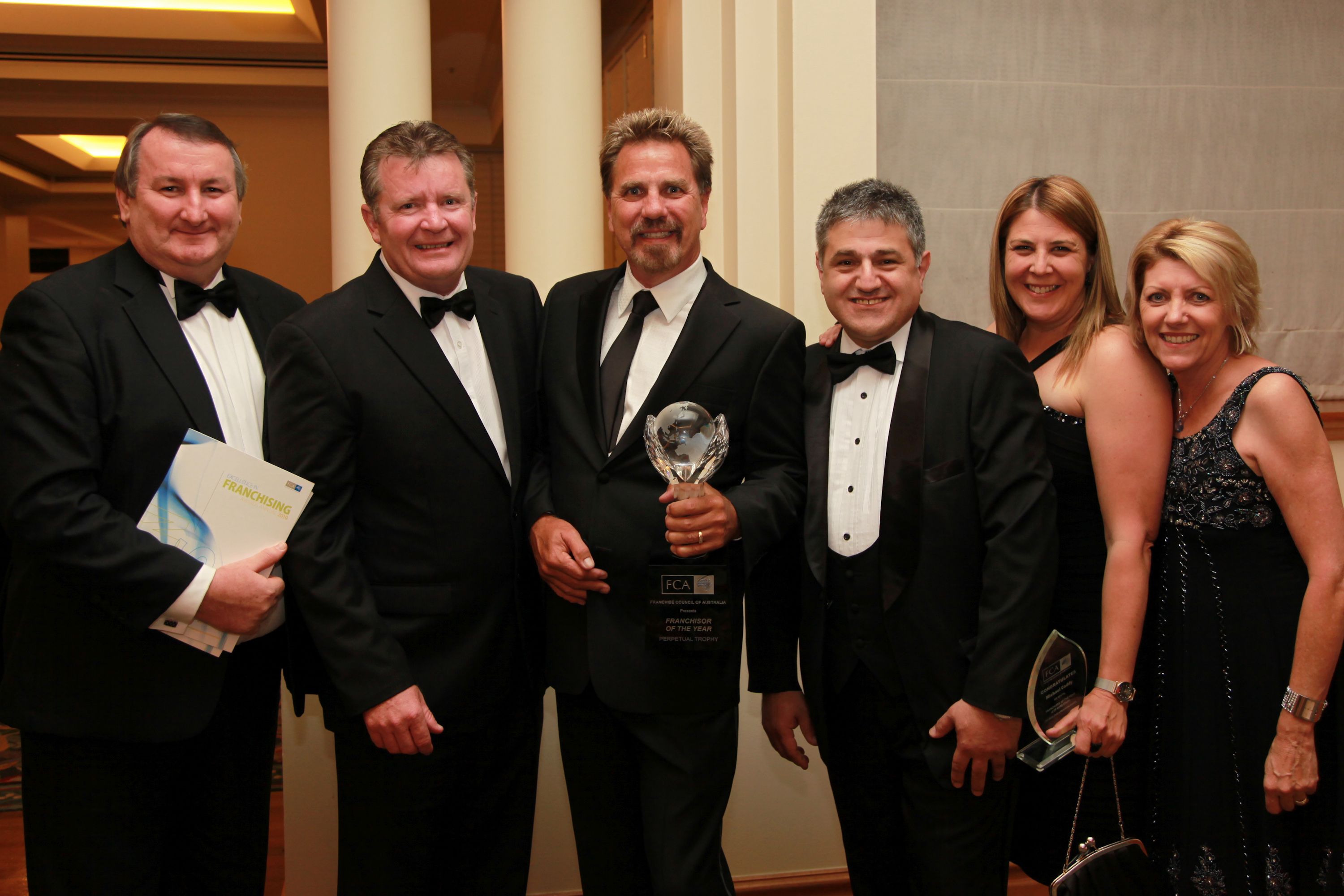
Last year, our client Mr Rental won the title of ‘Franchisor of the Year’ at the 2010 FCA (Franchise Council of Australia) Excellence in Franchising Awards. The PR potential from winning an award is huge and in light of the FCA awards that happened this week, we thought we’d share some advice on why you should be thinking about entering your company in business awards, and provide tips on how to prepare a good award submission.

Why would my company want to win a business award? What are the benefits?

We always encourage clients to enter business awards because of the opportunity they have to receive great recognition. It gives you fantastic PR and media opportunities both within your respective industry and through broader media channels, which allows you to reach a wider audience. Business awards highlight industry leaders, reveal innovative processes and products and ultimately attract new clients and customers to your business. An award win also boosts company morale and attracts top talent.

Where do I find awards opportunities?

The nature of your business will determine the categories and types of awards you should be entering. Your industry’s governing body is usually a good place to start for industry specific awards. Some major national business awards we encourage our clients to enter each year are BRW Fast Franchises, BRW ANZ Private Business Awards, Premier’s Sustainability Awards (VIC), Westpac New Zealand Franchise Awards and the FCA Excellence in Franchising Awards. Businesses can also find awards at a local level through council websites and the local chamber of commerce.

How to prepare an award-winning award submission

1. Read and understand award criteria. Criteria are a guideline to help you structure your award submission and a standard by which judges compare different entries. It is therefore crucial to understand them. Different sections are usually weighted differently and it is important to understand the areas requiring greater attention. Information seminars are often held to explain the marking criteria and offer tips and advice on completing the award. Understanding the criteria and submission requirements as soon as possible will ensure you have ample time to manage its completion.

2. Prepare brief responses to award questions. Once you are familiar with the criteria, go through the questions and requirements and jot down brief answers ensuring you address key points of the question reflecting your company’s key strengths and points of difference. After this, you should have a good understanding of the layout of your submission and what supporting information will be required.

3. Prepare supporting information. Anything you mention in your submission about company performance should be supported with evidence where possible. Things like sales performance, customer growth, brand awareness etc should all be supported with graphs and figures. This section usually calls upon specialties of other team members (ie operations, marketing) so it is important the award writer gives them enough time to gather such information.

4. Begin writing draft submission. Now that you have good outline of what you will write and supporting information on its way it’s time to start fleshing out the first draft of your award submission. Address each point of the question in limited detail without waffling on or exceeding word limit. Always remember the weight each question or section bears in relation to the overall criteria. Leave all references to supporting information as “Appendix blank” as this is something likely to change before the final version. Make sure the key information is included in the answer and the award reader doesn’t have to refer to an appendix for this.

5. Editing. Make sure the wording used in your submission is consistent, flows nicely and is easy for the reader to understand. Check for word economy and where sentences can be shortened. Ensure word limit isn’t exceeded for each section responses address questions properly. You can now reference any responses requiring supporting information ensuring all graphs, statistics etc are labelled and clear. Again, ensure your company’s strengths and points of difference are still highlighted as sometimes they can be lost in editing. Ensure anyone who has contributed information to the submission is satisfied it has been used accurately. Hand the submission over to a colleague to proof read before sending it to your General Manager or CEO to ensure it is aligned with the company’s overall mission and objectives.

6. Design, formatting and submission. When your submission is ready to be designed to your company’s branding standards, ensure it reflects the award’s formatting requirements. Make sure all graphs and appendices are displayed correctly as sometimes this changes when reformatted. Ensure all required documents like criteria sheet or front page are included. Give the award one final proof before printing, binding and submitting via the correct methods.

Key features of a great submission

1. Eye-catching and easy to read

2. Clear profile of your company and its core offering

3. Clear responses meeting key requirements of questions

4. Clear and appealing graphs and illustrations

5. Great supporting evidence to explain responses

The more time you put into an award submission, the better it will be. Leaving an award until the last minute will mean you’re not giving it its full potential to reflect your organisation. Using each team member to provide information on their function allows the true strengths of your business to be known.

Keep an eye out for upcoming award opportunities as it might just be your time to shine.

Share this post: Add to FaceBookAdd to StumbleUponAdd to Twitter

Are you ready to pitch?

If you’re like me, you excitably began your internship eager to make your mark and learn as much as you can toward building your PR experience. Armed with a wealth of knowledge, (and theory), you confidently begin your journey and start your quest. From assisting with media releases, to creating media lists and other various writing tasks, you get involved in whatever you can, and you’re feeling pretty good about yourself.

You get the call

That media release you just helped write for a top client has now been approved by them, and is ready

‘For Immediate Release’, and the Account Manager asks you to ‘pitch it out’ using your media list.

It all sounds simple enough, all I have to do is call a journalist and they will run my story, I can do that!

The Light Bulb moment

Even with many years of work experience under my belt, calling customers and liaising with a variety of people over the phone, including journalists, I was reasonably confident that I could do this and get great results. However, I had a moment where I stopped and thought, this is a little different in terms of the story, purpose and desired result, and maybe I should pause before I engage, after all, I don’t want to make a mistake with this one.

Time to pitch:

How hard can it be’ you might ask? It’s just a phone call or an email right? Wrong!

Many PR students are simply not taught how to pitch while they are at University, (I’m one of them), but if you have, then congratulations, you are one up on many of us. Often interns are only exposed to this process when they do an internship or work experience with little or no knowledge of the how to’s or thoughts across how to speak with journalists effectively and confidently.

Top Tips:

Just the thought of calling a journalist or editor is daunting to some, so how can you help overcome these thoughts and make your first pitch, (remember it will get easier the more you do). Your ultimate goal is to gain the most effective coverage you can reasonably achieve for your client, here are some tips that I have learn’t so far:

  • 1, 2 and 3 – Be prepared! Make sure you understand the release and the angle. This is your opportunity to ‘sell’ the value of your story and differentiate it from ‘just another pitch’. Have the    release in front of you and note the key points of your angle.
  •  Know the name of the journalist or editor you are calling, the last thing you want is to be ‘umming’   and ‘ahhing’ when the call is answered.
  • Be straight to the point and be real. Obviously you must be professional, but an honest yet concise conversation with the person you are speaking to goes a long way, you will most likely be speaking to them again very soon.
  • Ask for advice. It’s expected that you will have dozens of questions throughout your internship, so don’t be afraid to ask for advice and tips. Despite what I thought I knew, I asked lots of questions    that made all the difference, and will help you craft your own style.
  • Evaluate each pitch. After each of your first pitches, take a moment to recap and evaluate how the pitch went, think about how you can make the next one better, and any comments you picked up on. It’s all part of honing your skills toward becoming a great PR professional, you are already on your way!

The rumors:

You might have already heard that there is a space of contention between some journalists and PR professionals. Both groups are busy people in their own right and under pressure to work to deadlines but here are some interesting facts:

Oriella PR Network polled nearly 500 journalists and found that the number one resource that journalists in this study are using for sourcing was PR agencies, with a whopping 62 percent.

As for the first port of call when researching a news or feature story? PR again! Nearly 22 percent of respondents say their initial stop is a press release., (Allen, K. 2011).

Ultimately Journalists and PR pros’ need each other, so it is important to build your understanding and play an active part in this relationship toward a successful outcome. You may not always get your story across the line but if you continue to learn and hone your skills you are destined for great success. There’s nothing more satisfying than seeing your piece in a major national or even international publication, knowing your efforts helped get it there.

Resources:

PRIA is an excellent resource in areas such as pitching and often run workshops to help you grow. Kevin Allen is a regular contributor to Ragan’s PRDaily.com

http://www.prdaily.com/Main/Articles/8315.aspx

Image courtesy of: http://www.picturesdepot.com

Share this post: Add to FaceBookAdd to StumbleUponAdd to Twitter

A brief guide to the social media landscape

Trying to sort out your social media policy but can’t decide whether you should be tweeting or posting or digging? Well, thanks to this handy infographic from CMO.com you can tell your Flickr from your Facebook and all the other key social media sites. It assesses the benefits of getting involved in each of the platforms and grades them on four criteria.

Social Media Landscape 2011. Copyright: CMO.com

We found this infographic via Ragan’s PR Daily.

Share this post: Add to FaceBookAdd to StumbleUponAdd to Twitter

6 questions: Susan Ronai, Managing Editor, BUSINESSbne

Next up in our series finding out how journalists like to work, any issues they have with PRs, how they like stories to be pitched to them, etc, is Susan Ronai, managing editor of BUSINESSbne, a Brisbane specific magazine aimed at SMEs and targeted at business owners, managers and employees; effectively anyone who works in the business world.

1)      What is your deadline day?

My magazine is published 6 weekly, so the deadlines vary… the balance of this year is June 30, August 11, September 22 and November 4 and the time is close of business on that day.

2)      How do you prefer to be contacted (i.e. email, phone, fax, post)?

Prefer email by far.

3)      Is there a particular time of day you prefer to be contacted?

Doesn’t matter, but I don’t have mobile email, so I may not get an email until I’m back in the office.

4)      Do you like to meet companies and bosses for coffee/ lunch? If yes, do you have any favourite venues?

Anywhere except in town… the parking charges are prohibitive!

5)      What are your three pet peeves about PRs?

I don’t have any.

6)      What would the perfect story pitch be for you? And what’s the best PR pitch you have ever had?

I have recently asked Ignite to join with me in supplying copy once every 6 weeks for an interview style piece either on a person of note for “Have a Coffee with ….” or on a business for a “Business Success Story”, so would be interested in receiving pitches for those sections. The [best PR pitch] hasn’t happened yet so I can’t answer any further.

Share this post: Add to FaceBookAdd to StumbleUponAdd to Twitter

The basics of body language

At presentation skills training it’s always drilled into you that it’s not necessarily what you say, but how you say it. So you could be delivering the most brilliant speech ever, but if it’s done badly – mumbling, monotone, no eye contact, etc – then you may as well be reciting a nursery rhyme for all that your audience will take away from their experience. Perhaps a little extreme, but one aspect of delivery is body language. It’s a key part of how you present yourself, whether it’s in a speech, an interview or presentation. Every eyebrow twitch, hair twirl, eye movement or leg-crossing can indicate something about you.

Whilst we’re certainly not experts on the subject, we’ve done some research to offer you some top tips on understanding body language so that you can hopefully make it work in your favour.

1)      First impressions really count. When first meeting people it’s vital to make a good impression – make sure you have a firm (but not too firm) handshake with no sweaty palms; make proper eye contact (but don’t stare); be alert, if sitting down make sure you have a relaxed but upright posture.

2)      Learn the art of ‘mirroring’. This is when you pick up gestures and tone from a person and ‘mirror’ what they are doing. When done in a subtle way this is often said to make people feel more comfortable in your presence as it’s often something that occurs between close friends and family members. Don’t be too obvious though as otherwise people might assume that you’re making a mockery of them.

3)      Be ‘arm aware’. What are your arms and hands doing? Crossing your arms across your chest can be viewed as defensive, expressing opposition or being insecure; if sitting at a table, folding your hands in your lap or having them under the table can be viewed as untrustworthy; wringing your hands can be seen as a sign of nervousness; and when presenting an idea or talking be wary about being too wild in your gestures.

4)      Respect personal space. Never get too close to someone, especially in a workplace situation, unless you know them really well. People can really take offence; it can create nervous tension and create a negative atmosphere.

5)      Are you flirting with me? Women especially can have a minefield to manoeuvre round when it comes to body language being interpreted as flirtatious behaviour, for example stroking your neck (nervous) or fiddling with your hair (anxious). Be wary of this, especially when dealing with people of the opposite sex.

Another tip worth noting is for doing presentations and speeches – film yourself practicing and then play it back without any sound. You will notice any nervous ‘tics’ or repetitive actions as well as what works.

Whilst this blog post is our own work, we used a number of articles to inform our words: Forbes.com, Thinkquest.org, New York Business Partners and eHow.com.

Share this post: Add to FaceBookAdd to StumbleUponAdd to Twitter

6 questions: Jen Bishop, Editor and Publisher, Dynamic Business

Next up in our series finding out how journalists like to work, any issues they have with PRs, how they like stories to be pitched to them, etc, is Jen Bishop, editor and publisher of Dynamic Business, Australia’s highest circulating magazine for SMEs.

1)      What is your deadline day?

I have a different deadline every day of the week! We work on a two-month lead time as a rule, and don’t give out deadlines because if we haven’t commissioned something, why do you need to know?

2)      How do you prefer to be contacted (i.e. email, phone, fax, post)?

Always my email. Press releases by fax or post end up in recycling and I’m so often not at my desk, phone isn’t a good way to get me. I’m usually really quick to reply to emails and tweets/DMs though!

3)      Is there a particular time of day you prefer to be contacted?

Not really.

4)      Do you like to meet companies and bosses for coffee/ lunch? If yes, do you have any favourite venues?

Sometimes. I like venues close to my office so it’s less time out.

5)      What are your three pet peeves about PRs?

One: Chasing up the press release sent half an hour ago.

Two: Not doing your research and getting my name wrong/knowing nothing about the magazine.

Three: Phoning up and reading off a script (usually the intern).

6)      What would the perfect story pitch be for you? And what’s the best PR pitch you have ever had?

The best pitches are those targeted specifically to my publication by someone who has taken the time to look at it.

I get the best pitches from Caroline and Melissa Shawyer from the PR Group because they know exactly what I need and want and they make my life easier by thoroughly thinking something out before they pick up the phone.

Share this post: Add to FaceBookAdd to StumbleUponAdd to Twitter