Tag Archive for: public relations

Jumping on the Royal Wedding bandwagon

As a Brit, I’m actually quite excited about the forthcoming nuptials of William Wales and Catherine Middleton AKA Wills and Kate; mostly because I want to see what she and the lady guests will be wearing. The media frenzy since their engagement was announced last November has been incredible. I can only imagine what it’s like back in the UK having been out in Australia since February, but even out here it’s huge. All the main TV channels have sent their key presenters over to London to cover the ceremony and everything they can possibly think of before and afterwards. A lot of people can be forgiven for getting ‘Royal Wedding fatigue’ before it’s even happened, but there have been a few companies, brands and quirky products that have caught my eye and shown that, with a bit of clever creative thinking, it’s still possible to stand out in a crowded arena.

1)      T-Mobile

Known for their ‘flash mob’ style adverts, which have caused surprises and smiles in places such as London’s Liverpool Street station and Heathrow Airport’s Terminal 5, the mobile phone company created a spoof video of the Royal Wedding party dancing down the aisle. The video went viral, got a lot of media coverage, especially in the UK, and created a lot of positive sentiment for the company and its ‘life’s for sharing’ strapline.

2)      Legoland

A theme park in Windsor, UK, based around the popular children’s toy, Legoland decided to stage its own Royal Wedding outside its model of Buckingham Palace. Brilliant product placement and a great way to show the versatility and humour of the brand, it also manages to get in messages in the media coverage about its 15th anniversary and opening times.

3)      William Hill

Well-known UK bookmaker William Hill released its Royal Wedding odds earlier this week. It has actually been keeping the media updated with the odds on various different circumstances to do with the wedding long before they actually announced their engagement. What makes the story stand out is the obscure things they’ve managed to give odds for (and getting an exclusive with the BBC, which is quite strict in its promotion of brands). Odds on Wills being stood up at the altar? 100-1. What colour will the bride’s dress be? What will they be eating? What will the first song be? Which celebrity will be the first to arrive on the BBC’s coverage? Other bookies Ladbrokes and Paddy Power have also got in on the act. They’ll be taking bets on pretty much anything!

4)      KaTEA

It’s stupid but it made me laugh – a German company ‘Donkey Products’ managed to get worldwide coverage for its ‘KaTEA and William’ teabags, which make the Royal couple look like their having a bath in your tea cup.

5)      The Royal Family

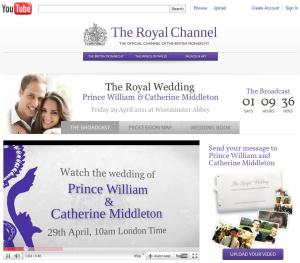
The Royal Family itself is getting with the times and announced that all coverage of the wedding will be on its very own YouTube channel. Coverage starts at 7pm Brisbane time!
And finally, it’s a friend of a friend but this spoof music video of ‘K Mid’ rapping about her 99 Problems is ‘totes’ worth a watch!

The value of work experience

It’s likely that everyone, at some stage in their life, has had their ear talked off by someone about the value of work experience when it comes to PR. For me, it was every single one of my lecturers. Each new subject I started came with a long speech on how important it was to get work experience in the industry before we finished our degree. After a year of this my brain started to automatically switch off whenever someone even mentioned the word ‘experience’.  It wasn’t until I walked in the door of one of my second year PR subjects that my perspective changed. My PR lecturer opened the first lecture by saying that if we didn’t have a solid year and a half of work experience under our belt by the time we finished, then no company would hire us. Well, that certainly caught my attention.

Although I feel the lecturer slightly over exaggerated in terms of no career prospects, I have to say getting work experience was one of the best decisions I ever made as a student. It gave me the opportunity to actually put the theory I learnt at university to use, not to mention develop vital skills in the media relations field, which you can only gain through practice. For those who are still unconvinced, here are my top five insights into the value of work experience.

1)      Real world experience teaches you necessary industry skills. Real world experience includes learning how to liaise with journalists (who can be scary but this skill is vital if you want to get any results for clients), write media releases (have you heard of a successful PR practitioner who can’t do this?) and effectively communicate with actual clients (not hypothetical university clients). When I started work experience at Ignite PR last year I had no idea how to pitch a story to a journalist; this just isn’t something you can be taught in a lecture. Now I know how to pitch, I consider this a necessity if you are planning on a future in the public relations industry or really any industry that involves dealing with the media.

2)      You get to work on a range of different projects. Work experience adds a whole new dimension to the term ‘popularity’. Everybody wants you on board their project for the extra support despite your lack of practical skills. This means that not only do you get moulded into the perfect PR technician but you also get to work on a variety of different client projects. This contributes even further to your knowledge base and level of expertise.

3)      It offers networking opportunities. Working in a PR company (or any company for that matter) is a fantastic way to meet professionals in both your industry and other related industries. Building a basic network of contacts will certainly give you a leg up on the career ladder and this network will only grow as you advance. It’s all about who you know!

4)      Looks great on the resume. The skills you can gain from doing work experience are the main motivator to go out and work for free, however an additional benefit is that it looks great on the resume from the perspective of potential employers. With thousands of other fish swimming around in the same pond, employers are likely to remember the fish that has an extra fin (or in this case, practical experience in the field) above all others. Having work experience under your belt gives you a strong advantage in the hunt for a job.

5)      Possibility of permanent work. The best outcome you can hope for in doing work experience is being offered a permanent job at the end of it. Although this isn’t a guarantee, if you work your hardest and prove yourself valuable to the company they may find it hard to let you leave after your time is up. Even if there is no job offer at the end of it, be assured the company will think of you when there is a job opening in the future.

This is only a small snapshot of the benefits work experience has to offer. I hate to sound like my lecturers, but it really is important to get work experience in the industry. The only way to realise its true value is to put your name out there and get your hands dirty. Thanks Ignite PR!

Share this post: Add to FaceBookAdd to StumbleUponAdd to Twitter

Media Storm of the Month – March 2011

This is a new regular blog-slot where we look at a news story that has taken off in that month.

March has been awash with controversy and genuine news, from the aftermath of the Christchurch quake to the even more tragic Japanese earthquake and its resulting tsunami, rising death toll and imminent nuclear meltdown. Not to mention the  scandal in the AFL with player manager Ricky Nixon and allegations of misconduct with a 17 year old girl, to Charlie Sheen’s outrageous public outbursts and increasingly weird behaviour to the prospect of war with Libya and more floods in Queensland and New South Wales.

The story we’re going to touch on as a Media storm of the Month though is the story about the YouTube video of the Year 10 Sydney student being bullied by a Year 7 boy. The story broke around the time of the National Day of Action against Bullying and Violence. A video was posted online of a much smaller boy punching another boy in the face and body; after several rounds the larger child suddenly retaliates, lifting the smaller boy off the ground and smashing him into the ground and leaving him to stagger off.

Daily Mail grab: http://www.dailymail.co.uk/news/article-1368886/Bully-bodyslammed-Casey-Punisher-says-s-sorry-blames-victim.html

Something that should have been sorted out by the school, the boy’s parents and the boys themselves has, thanks to the huge popularity and growth in social media and online networking sites, grown out of all proportion.

There was media outrage at the video and the attack and we now know that the larger Year 10 boy is 15 year old Casey Heynes, who has been bullied most of his school life and considered committing suicide last year, and the bully is 12 year old Ritchard Gale.

Both boys are now part of a media circus with interviews on major TV networks and coverage in all the main newspapers.

It has aired some interesting points and, it can’t be denied, was ‘good timing’ for a national bulling campaign. It has sparked a debate about bullying and violence in schools making other children affected not feel alone. Anti-bullying and children’s help charities such as Headspace, BeyondBlue and Kids helpline have all been able to jump on the bandwagon getting out their messages and contact details for all the other children who might be in need.

But the talk is also about what is it right to do to stand up for yourself? Casey had obviously been provoked and bullied for a long time, but was it right for him to retaliate with such force?

And how about the boy who filmed the whole incident on his mobile phone, shouldn’t he have been reprimanded as well? Should mobile phones be banned from schools all together? What can we do about this apparent rise in ‘cyber’ bullying?

But also, do children need to be protected from the media and journalists? In their desperate quest for ‘exclusives’ and ‘scoops’ the television news shows particularly escalated the issue and have effectively given credence to a schoolboy disagreement by asking ridiculous questions and adding weight to immature thoughts and feelings. Channel 9 even apparently showed Channel 7 interview coverage and claimed it as its own. A story about a schoolboy fight provoking a media battle, what is the media world coming to?

Five ways to maximize your agency spend

Spending hard-earned money to hire a creative or public relations agency is a big decision for many small business or franchise owners. If you are paying someone else to help you build your business (especially when you might not be paying yourself) you need to make sure you are getting your money’s worth.

Here are five ways to ensure you are getting the most out of your agency spend.

1)      Get your agency to manage the liaisons and marketing collateral with designers. There are some good designers out there but there are also many who will chew up your precious time and consistently fail to deliver. Agencies only use designers they can rely on as their livelihood depends upon it. Agencies are also skilled at handling erratic creative types, so give them the brief, then hand over the responsibility to save time and money. Don’t attempt to do your own logo unless you are a graphic designer.

2)      Let your agency be creative. You hired an agency to help you build your brand, obtain publicity and to generate awareness. Agency staff  know what they are talking about and are results and service orientated. Trust them to do their job to help deliver you the best outcome. If you aren’t going to let them have any creative reign, don’t hire them in the first place.

3)      Attend agency functions and events. If your agency puts on an event to show gratitude for your business make sure you turn up with an open-mind and ample business cards. Agency events, whether social or educational, provide excellent opportunities to network with other results-orientated businesses and can be a great way to expand your network. It can also be a great opportunity to learn something new and enhance your skills.

4)      Be open to new ideas.  What’s the point in hiring people to help you grow your brand if you are going to shut down everything they say? Some of the best ideas have come out of agencies. Listen and give them a chance to prove their worth.

5)      Get your agency to negotiate media buying and advertising for you. As well as having strong relationships with designers, most agencies will also have excellent relationships with advertising representatives. This means they have more power when negotiating deals and know how much they can push ad reps to obtain maximum value.

Wrap up 2010 with thoughtful presents to build your presence


Christmas is known as a time of giving and showing goodwill. A fantastic way to show you care about the people you have worked with all year is by sending them a simple Christmas present or a Thank You card. In today’s world of cyberspace it’s rare we send a card or a gift to someone through traditional mail. E-cards, Facebook messages and even Christmas texts are sadly all too common.

Sending traditional ‘snail mail’ presents or cards are often overlooked as relationship builders, yet if  used wisely they can help retain clients and show your suppliers you care. Relationships go a long way in this business and while some will argue a client will never stay just because you sent them a gift, a client that feels valued, knows the agency cares and who has a personal relationship with the team will find it much harder to sever the ties.

Before you send anything you should conduct a little bit of research – notice what your clients or suppliers eat and drink at functions, listen to comments about interests outside the office and pay attention to how they react to criticism or compliments.

Our top presents for suppliers or clients:

Fruit can make a refreshing change

1)      Chocolates (you’ll know their favourites from your preliminary research)

2)      Well packaged alcohol (as above)

3)      Quality gourmet hampers or fruit baskets

4)      Gift vouchers

5)      Flowers (if they aren’t allergic – again find out their favourites before hand)

Stay away from:

1)      Heavily perfumed products

2)      Foul smelling food items such as blue cheese or items with garlic

3)      Anything that could smash or leak in the delivery process

4)      ‘Joke’ presents – any item that could be misconstrued and taken offensively

5)      Cheesy photos of your team

Source: Bad Humour articles

Think class not crass

As for choosing cards, our general rule is to stay away from comedy, flirtatious words or the cards with music or voiceovers inside.

Select cards that look professional but still have an element of style that matches your business personality.

You can also get creative with gifts and provide something memorable and different. We give boxes of cherries to clients because they are not typical and it is something they can share with their team or take home for the family.

Merry Christmas!

The franchise tug of war – maximising PR for franchisee and franchisor

 Ignite PR & Marketing works with a wide variety of franchises and one of the key elements of support we provide is generating publicity for franchisees at a local level.

Specialising in providing public relations for franchises is at times a difficult task due to the complexities involved with managing the relationships and expectation of both the franchisor and franchisee.

A common issue we come across involves managing media for individual franchisees. Sometimes this process is laboured as franchisees may not deem a PR project a priority over the day to day running of their business. Sometimes they don’t return calls, approve press releases promptly or assist us in providing the right information to make a strong story. The franchisor will still expect strong results but we have found they can help the relationship, and maximise the power of PR for franchisees.

The most successful franchise companies let their franchisees know the value and importance of media coverage. They hold media training days, Q&A sessions and brief franchisees on the importance of wearing correct uniforms during photo shoots etc. They inform the network of media releases going out on their behalf and assist them as much as possible. It is crucial the franchisor communicates what public relations campaigns they are running with franchisees so they know how to deal with media when they call.

So what can be done to ensure both parties get the most out of utilising a PR agency for franchising development?

Franchisees can inform the PR department of any interesting community events they may be sponsoring, return calls and enquiries to the media or agency promptly and assist in developing or sourcing information for stories. They can make sure they represent the brand and company well (ie. keep logo/brand in shot in photographs etc). And be willing to be involved in any media opportunities thrown their way.

Franchisors can keep all current contact details up to date for franchisees, ensure that they have accurate and current high resolution photographs on file of each owner, inform franchisees of the PR company they are working with and also email out appropriate media releases to franchisees so they are across all media opportunities. It is also a good idea to hold some basic media training at your national conference so franchisees understand what is expected of them and are aware of how effective media coverage can be.

Ignite PR & Marketing specialise in providing PR for franchises and can help raise awareness of your brand. If you have any questions about franchise PR, please feel free to contact us on 07 3368 1650.


Navigating the murky waters of professional PR measurement

In 2010, we’re utterly obsessed with measurement. This obsession hasn’t been a quantum shift, a grand epiphany, or a light bulb moment, it’s been a slow build, a snowball culminating with the global financial crisis.

Today business owners must be able to produce proof at a moment’s notice to substantiate any spend.

Gone are the ‘good’ old days when a crisp suit, lunch on the agency and the whisper of expensive cologne were enough to reassure clients of campaign success (think Madmen).

Today, we’re pay-per-click, we’re analytics, we’re tangible results, we’re figures, reports and metrics, except of course when it comes to professional public relations. The reason for this is a fundamental lack of any uniform measurement platform for PR and marketing agencies in Australia to use, by which all can be judged.

The fact that such a system remains nonexistent in 2010 almost beggars belief.

The elephant in the room is highlighted all the more by PR agencies who flout this lack of regulation by presenting clients with reports boasting hundreds of thousands, or even millions of dollars worth of positive PR. These often ludicrous figures are reached by a not-so-clever multiplication of AVE figures.

AVE, meaning Advertising Value Equivalent is the closest thing PR and marketing agencies have to adequate measurement tools. AVE is calculated by PR professionals literally sitting down with media clippings, a ruler and a calculator and determining the size of any given media clipping. Based on the size we are able to establish what the equivalent advertising price for the space would be.

But here’s where it gets messy. Some agencies will then add a multiplier to the total value, on the assumption that editorial is more credible than advertising. Many agencies consider 3 times AVE to be acceptable, however some use 5 times AVE or, heaven forbid, even more.

It may be partly due to these measurement disparities that the Public Relations Institute of Australia actually discourages the use of AVE figures and also states in its code of ethics:

‘Members shall refrain from proposing or agreeing that their consultancy fees or other remuneration be contingent entirely on the achievement of specified results’.

However, like it or not, clients are increasingly asking for these figures and agencies which refuse to produce them may be seen as disreputable.

Recently the director of a large Sydney agency told us she was now being asked for AVE figures by clients for the first time, even though the practice has been commonplace in Queensland (at least for our agency) for many years.

So here’s the punch: When two different agencies can deliver the same level of media coverage, but value this coverage wildly differently, how can clients adequately compare ‘apples with apples’ when it comes to PR?

The establishment of a viable evaluation platform for professional public relations and marketing, which is accepted by a majority of service providers and backed by the PRIA, is one of the most vital steps in the maturation of the industry in Australia.

Agencies who consistently deliver strong results for their clients will welcome this new age of measurement and transparency.

Internships – Are they really worthwhile?

The importance of internships is discussed frequently at university by lecturers but is it really that important to undertake one?

I believe it is. I have just started an internship at Ignite and already I can see the advantages. 

There are so many benefits to be gained from internships but the most important is the real world experience you garner.  Everything I am learning will help me with my studies and when I enter the workforce I will be more prepared than other graduates. 

Taking on an internship allows you to decide if a job is suited to you and if it is the career path you really want to follow, which is especially important to decide before you finish your degree and obtain a job that you might not enjoy. 

Internships allow you to finally apply all the knowledge and practical skills you’ve had drilled into you during lectures in a real work setting. 

Nothing can beat the experience and reference you gain during an internship and as a bonus it looks excellent on a resume.  In addition, employers are more likely to employ a graduate that has practical experience over another who simply has a degree. 

Internships are also a great confidence booster.  After gaining real world experience in the industry and the skills and knowledge that follow, you’re immediately going to be more confident when you graduate and go through the process of finding a job.  Just knowing you have some relevant experience behind you gives you an edge.  Internships also become great networking opportunities. 

I’ve only been at my internship for a couple for weeks, but I’ve already had the chance to undertake activities which if I was working in the industry I would be responsible for on a regular basis.  For example I have written media releases, business appointments and undertaken pitching and following up.  I have gained real word experience on public relations activities and I have observed how a standard day would operate for a practitioner. 

My experience is strictly from a public relations field but I believe that internships are valuable in any industry. No university degree can give you the same experience an internship can. 

If you have the time and get the opportunity while at university to undertake an internship I highly recommend it, I promise you that you will see the benefits.

Is the audience listening? The compounding value of market research and targeted PR.

Last year I began managing the public relations for a new client in the retail franchising sector. Following our first meeting I received an email from the client with their ‘brand strategy kit’ of about 30 pages attached.

Contained in the kit were results of market research, which had allowed the client to glean to following facts about their customer base, among others:

 • Young, suburban, singles couples and families

 • Almost 2 in 3 under 40 years of age

• Children under 12 years of age

• Very regular take away eaters

From this research our client had further categorized their customer demographics into three general categories with specific characteristics assigned to each. I was also provided with research on the current market perception of their brand, a map of their key competitors and a copy of their brand values statement.

After examining the kit, I was struck by how ‘ready’ the company was for PR. They were ready because, as a business, they were able to confidently answer one question:

Who do you want to talk to and why?

In my experience, unsuccessful PR, from an ROI point of view, is often engaged and executed too early, too late, or too broad.

Too early might occur when a business is only semi operational or in start up phase. The business owner may be desperate to get some exposure but isn’t quite sure who the market for the product actually is. In the long term, this kind of ‘ready, fire, aim’ approach to marketing and PR can do a brand more harm than good.

Too late is often either when a product is bad and this has affected sales, or when a brand’s reputation is damaged. Damaged reputations can sometimes be mended over time with the help of PR, bad products, however, almost always remain bad products.

Too broad arises when clients don’t think strategically about their communication goals (and do not listen to the advice from their PR agency). Let’s say a client has a new product. It is a niche piece of medical equipment to be sold into hospitals. The client may want a spot on the 6pm news, but is this really the best place for the product to appear? How many of these viewers are potential buyers of the product? Probably less than one percent. The right location for editorial on such a product is respected medical journals, online and print industry media, targeted TV and radio segments and the medical sections of the major papers.

Avoiding the aforementioned pitfalls is made much easier with a strong customer profile to fall back on when in doubt. So before you jump into bed with your marketing or PR agency, consider how much you really know about your customers? If the answer is ‘not much’ spend the time and money to properly determine your target market (or least listen to your current PR agency if they advise this step and let them help you reach the right market).

Joseph Keller, Account Manager

An introduction to the wire frame

Working in an integrated agency, the team at Ignite PR & Marketing are more than ‘just’ PRs. We have to be able to offer our clients the whole she-bang and recently I’ve been working closely with one client to redevelop their website.

Working in an agency you will always learn along the way. Collecting skills as you develop in your role. One thing I’m eagerly learning more about, but am by no means a pro at, is web design. For this particular client project I have been working with a local Brisbane web design agency to bring the client’s website to life again. Following lengthy conversations with my client we were able to form a very definite idea about how the new website should look – from the colours, messages conveyed and the site’s navigation.

And this is where I introduce the wire frame.

Wikipedia states a website wireframe is:

A website wireframe is a basic visual guide used in interface design to suggest the structure of a website and relationships between its pages. A webpage wireframe is a similar illustration of the layout of fundamental elements in the interface. Typically, wireframes are completed before any artwork is developed.

Image via Mike Rohde (Flickr)

This visual guide has been a god send and is, I believe, one of the simplest ways for a project / account manager and designer to work together effectively and without butting heads !

Sometimes in an integrated agency we fall into the trap of thinking we can do it all. We become generalists not specialists. This isn’t necessarily a bad thing, but it is important to remember to identify opportunities to learn and develop new skills. This project was one such opportunity.

I’ve learnt a lot from this project about how I can better communicate my expectations and ideas and the use of a visual guide such as a wireframe is one way. It allows all parties to clearly see what is being proposed and provides a point for discussion and collaboration.  As a person driven by visual identifiers it, for me, is an easier way to demonstrate to others involved how I ‘see’ a project being developed rather than writing a lengthy project brief.

In collaboration between myself, the client and our web design team we have been able to present a refreshed website that combines design sensibility while checking the boxes of what the client wanted from their online presence.

We’re in the process of finalising the website for an early February launch so, like an Oral B ad, I cannot show you it just yet. In the mean time, check out some wireframe inspiration here.

– Lani Pauli, Account Manager