As a Brit, I’m actually quite excited about the forthcoming nuptials of William Wales and Catherine Middleton AKA Wills and Kate; mostly because I want to see what she and the lady guests will be wearing. The media frenzy since their engagement was announced last November has been incredible. I can only imagine what it’s like back in the UK having been out in Australia since February, but even out here it’s huge. All the main TV channels have sent their key presenters over to London to cover the ceremony and everything they can possibly think of before and afterwards. A lot of people can be forgiven for getting ‘Royal Wedding fatigue’ before it’s even happened, but there have been a few companies, brands and quirky products that have caught my eye and shown that, with a bit of clever creative thinking, it’s still possible to stand out in a crowded arena.
1) T-Mobile
Known for their ‘flash mob’ style adverts, which have caused surprises and smiles in places such as London’s Liverpool Street station and Heathrow Airport’s Terminal 5, the mobile phone company created a spoof video of the Royal Wedding party dancing down the aisle. The video went viral, got a lot of media coverage, especially in the UK, and created a lot of positive sentiment for the company and its ‘life’s for sharing’ strapline.
2) Legoland
A theme park in Windsor, UK, based around the popular children’s toy, Legoland decided to stage its own Royal Wedding outside its model of Buckingham Palace. Brilliant product placement and a great way to show the versatility and humour of the brand, it also manages to get in messages in the media coverage about its 15th anniversary and opening times.
3) William Hill
Well-known UK bookmaker William Hill released its Royal Wedding odds earlier this week. It has actually been keeping the media updated with the odds on various different circumstances to do with the wedding long before they actually announced their engagement. What makes the story stand out is the obscure things they’ve managed to give odds for (and getting an exclusive with the BBC, which is quite strict in its promotion of brands). Odds on Wills being stood up at the altar? 100-1. What colour will the bride’s dress be? What will they be eating? What will the first song be? Which celebrity will be the first to arrive on the BBC’s coverage? Other bookies Ladbrokes and Paddy Power have also got in on the act. They’ll be taking bets on pretty much anything!
4) KaTEA
It’s stupid but it made me laugh – a German company ‘Donkey Products’ managed to get worldwide coverage for its ‘KaTEA and William’ teabags, which make the Royal couple look like their having a bath in your tea cup.
5) The Royal Family
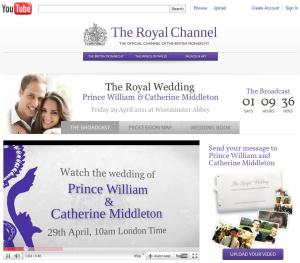
The Royal Family itself is getting with the times and announced that all coverage of the wedding will be on its very own YouTube channel. Coverage starts at 7pm Brisbane time!
https://ignitepr.com.au/wp-content/uploads/2013/10/Ignite-WebLogo011.png00igniteprhttps://ignitepr.com.au/wp-content/uploads/2013/10/Ignite-WebLogo011.pngignitepr2011-04-28 09:43:012013-12-26 00:02:14Jumping on the Royal Wedding bandwagon
‘Social media’ is still the marketing buzz phrase, but lots of companies still don’t know how to work with it and make it work for them. Here are a few things NOT to do.
1) Sell, sell, sell: social media is all about building relationships, getting referrals, having conversations with people on your wavelength. Use it as a PR tool, not for direct sales. It won’t work otherwise. If you don’t put out good content, there’s no value, so no one will be interested in what you have to say.
2) Join too many sites: it’s better to do one or two sites really well, than too many badly. Be strategic about which one(s) you choose then make the most of them. Make sure your profiles are always completed and updated regularly.
3) Be argumentative: it might get some attention in the short term, but think about the long term, who wants to listen to the moaning argumentative colleague in the office?
4) Take, take, take: social media is about relationships. Those involve give and take. Give advice, ideas, tips, information, thanks, etc, and you will get back. Constantly think about what value you are adding.
5) Don’t join any groups: social media is an online community, so that involves sharing information and expertise, so joining groups is a great way to contribute, sign post what you’re interested in, what discussions have authority to contribute to, where you can add value.
Finally, even though social media is what everyone’s talking about, good old face-to-face meetings and events are not to be sniffed at. They can be an excellent extension of social media. In fact, social media can be a great way to extend your offline network.
Share this post:
https://ignitepr.com.au/wp-content/uploads/2013/10/Ignite-WebLogo011.png00igniteprhttps://ignitepr.com.au/wp-content/uploads/2013/10/Ignite-WebLogo011.pngignitepr2011-04-27 16:31:392013-12-26 00:02:14How not to do social media
The latest issue of our newsletter, Ignition, is out now. You can read it here. Email trina@ignitepr.com.au if you want to be added to our mailing list.
https://ignitepr.com.au/wp-content/uploads/2013/10/Ignite-WebLogo011.png00igniteprhttps://ignitepr.com.au/wp-content/uploads/2013/10/Ignite-WebLogo011.pngignitepr2011-04-20 14:00:562013-12-26 00:02:14New edition of ‘Ignition’ out now
Ultimately, we recommend any executives who will be undertaking media interviews to undergo professional media training to hone key messages and delivery – it’s you and your company’s reputation on the line after all – but we thought it would be worth sharing just a few pointers to bear in mind if you’ve got a big interview coming up.
1) Meet deadlines: journalists are busy people and the story they are working on is the most important thing (to them) at that time, respect that by responding to requests in a timely manner, and when a big story breaks make sure you are available.
2) Preparation is key: never ever wing it. Always try and get a full brief on the questions that will be asked, have your key messages ready to go, try and actually practise an interview with a friend or colleague asking the tricky questions.
3) Know what you want to say: shape your message(s), work out what you want to say and how you can say it as simply as possible, always avoid jargon and don’t over complicate. Stay on track with your message(s) throughout the interview and learn how to bridge – i.e. when the question doesn’t necessarily cover what you want to say you can add your own extra bits. For example, “It’s important to remember that…”, “Before we get off that topic, let me just add…” etc. Try and think about two or three key ‘take-away’ points you want the journalist/ viewers/ readers to remember.
4) And how you want to say it: body language and eye contact are important, often (for television and radio) it’s not really what you say its how you say it.
5) Tell the truth: stick to the facts, distinguish between fact and opinion, if you don’t know the answer to something say so.
6) Take written information: reporters often need help putting an issue in perspective, so feel free to provide them with written information to highlight the key facts and figures.
7) Never say “No comment”: if you can’t answer something or choose not to, just give a brief explanation why otherwise it can be a little like a red rag to a bull.
8) Silence is golden: don’t talk to fill any silences, say what you want to say and then it’s the reporter’s responsibility to keep the interview going.
9) Nothing is 100% off the record: it’s worth remembering that a journalist is always on the lookout for the next big story, don’t let your ‘off the record’ comment become that; nothing is ever fully off the record.
10) Get performance reviews: everyone can get better so make sure you review resulting articles or the broadcast coverage and seek comments and feedback from friends and colleagues
Good luck!
Share this post:
https://ignitepr.com.au/wp-content/uploads/2013/10/Ignite-WebLogo011.png00igniteprhttps://ignitepr.com.au/wp-content/uploads/2013/10/Ignite-WebLogo011.pngignitepr2011-04-20 12:05:172013-12-26 00:02:14Top tips for media interviews
“I don’t have a creative bone in my body” is something we’ve heard a few times. Luckily not in the office, as being creative and having good ideas are all part of a PR professional’s role. But we believe that everyone can have great ideas, it just takes some facilitating in the form of a ‘brainstorm’ or ‘thought shower’ as the politically-correct police are calling it (apparently ‘brainstorm’ might affect epileptics).
Brainstorms are when a group of people gets together to come up with loads of ideas to solve a particular problem. The problem can be anything from “what can X company do next year to generate publicity?” to “what shall we call this event for client Y?” to “what new products can we develop?” – basically, anything. The aim of a brainstorm is to come up with as many different ideas as possible, some way out of leftfield, some things that have been tried before, and some that are just pure original brilliance, to come up with the best possible solution.
In PR and the marketing industry in general it’s important to think differently and come up with great ideas and new ways of doing things. We regularly brainstorm for clients and potential clients and even ourselves. But a word of warning, don’t just be creative for creative’s sake – the solution must be right for the problem and also the client. Here are our top five tips for effective brainstorming.
1) Establish an atmosphere for creativity
Select the room for the brainstorm, sometimes it’s good to get outside or away from the norm. Make sure it’s prepared and a relaxing place to be – play some music, have some refreshments available, make sure there are plenty of coloured pens and pencils, flip charts, sticky notes, paper, etc. Have any props you might need ready to hand. Ensure that it is decided beforehand who will document all the ideas – consider recording the brainstorm so that no ideas are lost. Make sure you have an agenda for the brainstorm and make sure you set a time limit from the outset so people know how long they need to commit to.
Consider doing some warm up exercises for five to ten minutes to create a more relaxed atmosphere and get people thinking laterally, for example:
Word association game: Everyone stand up in a circle facing inwards. Have a ball. The first person with the ball throws the ball to someone else in the circle whilst saying a word, e.g. carrot. The second person who receives the ball says a word that instantly comes into their head associated with the first person’s word, e.g. orange, whilst throwing the ball to the third person. And so on.
One word story-maker: Go round the group creating a story one word at a time, have signals that change the direction of the story, e.g. the story might be travelling clockwise round a group of people but by putting your hand up you can change the direction to be anti-clockwise. See whether you can actually create something coherent.
2) No idea is a bad idea – set the ground rules
If possible, give the participants the brief before the brainstorm so they can come with some ideas already. But make sure you just give an introduction to the problem, don’t plant any ideas to limit the thinking.
It’s important for the person chairing the brainstorm to establish the rules and manage the whole process, including reinforcing the rules.
BRAINSTORM RULES
Anything goes – don’t judge ideas, they can be possible solutions but they may also be something that stimulates another idea from someone else in the group, so no idea is a bad idea, every idea is equally important and valid
Encourage people to think as broadly and wildly as possible
It’s all about quantity not quality at this stage – you want as many ideas as possible
Encourage laughter and chat, but don’t allow criticism. And encourage everyone – don’t let one or two people dominate
Stay focused on the problem/ topic
3) Use different techniques
During the brainstorm you can just present people with the problem and get them to come up with ideas, but often there needs to be more structure to a session. There are many different tools and techniques to use.
Six thinking hats: Developed by physician, author and inventor Edward de Bono, this technique advocates that everyone has to think a particular way at the same time. There are six different ‘states’ of mind – the six thinking hats – that have been assigned a colour. Switching mind state can be done literally or metaphorically by switching hat colour.
WHITE
Information – what information do you know, what information do you need?
RED
Emotions – what’s your hunch or feeling about something (without justification)
BLACK
Bad points judgement – why might something not work, use logic to identify barriers to success
YELLOW
Good points judgement – why something will work, use logic to identify benefits, why something might work
GREEN
Creativity – what are the possibilities, the alternatives, follow thoughts to new ideas
BLUE
Thinking – manage your thinking
All of these thinking hats are supposed to help everyone in a particular thinking hat stage think more deeply. They present problems and solutions about the ideas you might come up with.
Opposites: what is the worst possible solution to the problem? If you can think of the worst outcome, this may facilitate thinking about the best!
Flash cards: you know the children’s ABC flash cards with a letter and a picture of something? Well they’re great for brainstorms. Take a card and associate whatever you see on there with the problem in hand.
Random words: similar to flash cards, take a random word or thing and try to associate it in as many different ways as possible to the problem.
Personas: encourage people to think as if they were a different person – come up with various different personas to make people think about a problem from someone else’s point of view. This is quite useful if you work in an office where the demographic is very similar and everyone is thinking of solutions from their own point of view, it can introduce new thoughts and difference perspectives.
Other things you can do are:
Split into smaller groups, give each group a flipchart to brainstorm, move to the next flipchart and brainstorm around the ideas on there
If people are initially nervous about sharing ideas verbally, get them to write ideas on sticky note
If you’re planning a long session, have a break-out room with snacks and refreshments for breaks
Give people yellow cards to put down if someone is being too critical and a grey card when ideas are becoming too boring or mundane
4) Define and refine
At the end of the brainstorm, if there’s time, go through all the ideas and get everyone to vote on the five best ideas that can then be further developed. Or split all ideas into three groups – ideas that can work immediately, ideas that may work in the future with further development, ideas that just don’t or won’t work. If there isn’t time, make sure you sit down after the brainstorm session to do this.
Also after each brainstorm make a note of what worked well and what you think could have been done differently so you can hone the process and techniques you use.
Once you’ve had your first brainstorm you always have more to combine, extend or develop ideas from the first one, it doesn’t always have to be about coming up with brand new ideas.
5) Look outside the box
When choosing people to attend a brainstorm don’t restrict yourself to people in your office, think about bring outsiders into the brainstorm. If possible, make selections on who comes according to their expertise and interests, throw in some people from different business areas or with different skillsets as this might throw up something new.
The more you brainstorm, the better you get, it should be part of every pitch or planning process or just everyday business to unearth new ideas and ways of doing things and reinvigorate brands and businesses. Enjoy!
Share this post:
https://ignitepr.com.au/wp-content/uploads/2013/10/Ignite-WebLogo011.png00igniteprhttps://ignitepr.com.au/wp-content/uploads/2013/10/Ignite-WebLogo011.pngignitepr2011-04-13 11:40:592013-12-26 00:02:14How to run a brilliant brainstorm
It’s likely that everyone, at some stage in their life, has had their ear talked off by someone about the value of work experience when it comes to PR. For me, it was every single one of my lecturers. Each new subject I started came with a long speech on how important it was to get work experience in the industry before we finished our degree. After a year of this my brain started to automatically switch off whenever someone even mentioned the word ‘experience’. It wasn’t until I walked in the door of one of my second year PR subjects that my perspective changed. My PR lecturer opened the first lecture by saying that if we didn’t have a solid year and a half of work experience under our belt by the time we finished, then no company would hire us. Well, that certainly caught my attention.
Although I feel the lecturer slightly over exaggerated in terms of no career prospects, I have to say getting work experience was one of the best decisions I ever made as a student. It gave me the opportunity to actually put the theory I learnt at university to use, not to mention develop vital skills in the media relations field, which you can only gain through practice. For those who are still unconvinced, here are my top five insights into the value of work experience.
1) Real world experience teaches you necessary industry skills. Real world experience includes learning how to liaise with journalists (who can be scary but this skill is vital if you want to get any results for clients), write media releases (have you heard of a successful PR practitioner who can’t do this?) and effectively communicate with actual clients (not hypothetical university clients). When I started work experience at Ignite PR last year I had no idea how to pitch a story to a journalist; this just isn’t something you can be taught in a lecture. Now I know how to pitch, I consider this a necessity if you are planning on a future in the public relations industry or really any industry that involves dealing with the media.
2) You get to work on a range of different projects. Work experience adds a whole new dimension to the term ‘popularity’. Everybody wants you on board their project for the extra support despite your lack of practical skills. This means that not only do you get moulded into the perfect PR technician but you also get to work on a variety of different client projects. This contributes even further to your knowledge base and level of expertise.
3) It offers networking opportunities. Working in a PR company (or any company for that matter) is a fantastic way to meet professionals in both your industry and other related industries. Building a basic network of contacts will certainly give you a leg up on the career ladder and this network will only grow as you advance. It’s all about who you know!
4) Looks great on the resume. The skills you can gain from doing work experience are the main motivator to go out and work for free, however an additional benefit is that it looks great on the resume from the perspective of potential employers. With thousands of other fish swimming around in the same pond, employers are likely to remember the fish that has an extra fin (or in this case, practical experience in the field) above all others. Having work experience under your belt gives you a strong advantage in the hunt for a job.
5) Possibility of permanent work. The best outcome you can hope for in doing work experience is being offered a permanent job at the end of it. Although this isn’t a guarantee, if you work your hardest and prove yourself valuable to the company they may find it hard to let you leave after your time is up. Even if there is no job offer at the end of it, be assured the company will think of you when there is a job opening in the future.
This is only a small snapshot of the benefits work experience has to offer. I hate to sound like my lecturers, but it really is important to get work experience in the industry. The only way to realise its true value is to put your name out there and get your hands dirty. Thanks Ignite PR!
Share this post:
https://ignitepr.com.au/wp-content/uploads/2013/10/Ignite-WebLogo011.png00igniteprhttps://ignitepr.com.au/wp-content/uploads/2013/10/Ignite-WebLogo011.pngignitepr2011-04-06 09:24:222013-12-26 00:02:14The value of work experience
Let it be said that obviously all of our clients are wonderful to work with, but everyone has their ‘moments’ so we thought it would be a useful exercise to look at what clients can do to help their PR agencies so that time is being spent in the work that will get the best results possible.
Believe it or not, you play a crucial role in ensuring our success with your organisation. We will show enthusiasm and understanding for your business and listen to your daily pressures, but similarly in a perfect world there are certain criteria that go towards making the perfect client.
1) Let’s work as a team: don’t make it be you vs. us, we want to be part of your team, like an extension of your in-house department, so let’s work together like that. We might be able to bring a different perspective to the table as well, so use it. We want to be a partner, not just another supplier. We’ll need input from you as well; if you think we can work in silo you won’t get the best from the relationship
2) Trust us and listen to our advice: you hired us for our insights and expertise, so please listen to us. We might not always tell you what you want to hear, but we never said it was going to be easy.
3) Share and share alike: share your information with us as much as possible as early as possible, if we don’t know the full picture we can’t sell your stories.
4) Don’t set us up to fail: give us reasonable timeframes and reasonable budgets to allow us to do the best job possible and have realistic expectations of what can be achieved.
5) Appreciate the value of PR: you hired us so hopefully that means you have an understanding of PR and what it can achieve.
6) Give us time: it will take a while for us to establish relationships with you and your audiences, give us at least six months. If you’re not happy after that, then you need to have serious words with us.
7) Work out how you will determine success: work with us to come up with some measurable goals so we’ll both know whether something’s worked and has been a success, for example just because it’s a big media title doesn’t necessarily mean it’s the right one for your business, so, if you’ve told us who your audiences are, listen to us on that one.
8) Speak up: if you don’t like what we’re doing, at any point, tell us. We’d rather hear it and try and fix it than not know and have you suffer in silence or worse still, sack us.
9) Know what you want: the better the brief, the better the solution.
10) Make your mind up: if you must change your mind about something make sure you understand and appreciate the implications.
11) More work means more money: we’re a business too and much as we love you, we don’t work for free.
12) Pay us on time: slow payers get slow workers.
13) Give credit where it’s due: it’s nice to get a thank you.
And on the nitty gritty day-to-day stuff:
14) Appreciate deadlines: you have deadlines, we have deadlines, journalists have even tighter deadlines and generally if we don’t hit them we’ll miss the opportunity.
15) Be prepared: if you’ve got an interview and we’ve given you briefing notes, please read them.
16) Know the value of a good picture: good photography is very important; it can make or break a story.
17) Understand the bigger picture: you or your product aren’t always going to be the main event, there’s a lot of news and competing information out there.
18) You might need to wait for coverage: we’re pitching to long lead and short lead media, stories might not appear straight away.
19) Be available: if a story is breaking, make sure you’re available should journalists need to talk to you.
20) Have a laugh: everything’s much better when you have a laugh with us.
Obviously no-one’s perfect, but hopefully the above points have given some food for thought. Do you agree with us?
Share this post:
https://ignitepr.com.au/wp-content/uploads/2013/10/Ignite-WebLogo011.png00igniteprhttps://ignitepr.com.au/wp-content/uploads/2013/10/Ignite-WebLogo011.pngignitepr2011-03-30 13:26:412013-12-26 00:02:14How to be the perfect client
This is a new regular blog-slot where we look at a news story that has taken off in that month.
March has been awash with controversy and genuine news, from the aftermath of the Christchurch quake to the even more tragic Japanese earthquake and its resulting tsunami, rising death toll and imminent nuclear meltdown. Not to mention the scandal in the AFL with player manager Ricky Nixon and allegations of misconduct with a 17 year old girl, to Charlie Sheen’s outrageous public outbursts and increasingly weird behaviour to the prospect of war with Libya and more floods in Queensland and New South Wales.
The story we’re going to touch on as a Media storm of the Month though is the story about the YouTube video of the Year 10 Sydney student being bullied by a Year 7 boy. The story broke around the time of the National Day of Action against Bullying and Violence. A video was posted online of a much smaller boy punching another boy in the face and body; after several rounds the larger child suddenly retaliates, lifting the smaller boy off the ground and smashing him into the ground and leaving him to stagger off.
Daily Mail grab: http://www.dailymail.co.uk/news/article-1368886/Bully-bodyslammed-Casey-Punisher-says-s-sorry-blames-victim.html
Something that should have been sorted out by the school, the boy’s parents and the boys themselves has, thanks to the huge popularity and growth in social media and online networking sites, grown out of all proportion.
There was media outrage at the video and the attack and we now know that the larger Year 10 boy is 15 year old Casey Heynes, who has been bullied most of his school life and considered committing suicide last year, and the bully is 12 year old Ritchard Gale.
Both boys are now part of a media circus with interviews on major TV networks and coverage in all the main newspapers.
It has aired some interesting points and, it can’t be denied, was ‘good timing’ for a national bulling campaign. It has sparked a debate about bullying and violence in schools making other children affected not feel alone. Anti-bullying and children’s help charities such as Headspace, BeyondBlue and Kids helpline have all been able to jump on the bandwagon getting out their messages and contact details for all the other children who might be in need.
But the talk is also about what is it right to do to stand up for yourself? Casey had obviously been provoked and bullied for a long time, but was it right for him to retaliate with such force?
And how about the boy who filmed the whole incident on his mobile phone, shouldn’t he have been reprimanded as well? Should mobile phones be banned from schools all together? What can we do about this apparent rise in ‘cyber’ bullying?
But also, do children need to be protected from the media and journalists? In their desperate quest for ‘exclusives’ and ‘scoops’ the television news shows particularly escalated the issue and have effectively given credence to a schoolboy disagreement by asking ridiculous questions and adding weight to immature thoughts and feelings. Channel 9 even apparently showed Channel 7 interview coverage and claimed it as its own. A story about a schoolboy fight provoking a media battle, what is the media world coming to?
https://ignitepr.com.au/wp-content/uploads/2013/10/Ignite-WebLogo011.png00igniteprhttps://ignitepr.com.au/wp-content/uploads/2013/10/Ignite-WebLogo011.pngignitepr2011-03-23 11:52:062013-12-26 00:02:14Media Storm of the Month – March 2011