Media Storm of the Month – April 2011

We expected more of a ‘foolish’ start to April in the media than Triple M’s attempt at convincing rugby league fans the Logan Leopards would become the NRL’s 17th team. Perhaps, according to some people, the foolishness was saved for Kevin Rudd’s revelation on ABC television program Q&A that suggested his old Labor Party frontbench was opposed to a carbon tax – the same policy now at the forefront of the party’s pledge. The Gold Coast Suns also get a guernsey this month for their remarkable first ever AFL win, which almost outplayed Easter. Thankfully Anzac Day got the commemoration it deserved with marches across the country attracting record crowds.

And what timing it was in the month we pay tribute to our fallen soldiers that the Australian Defence Force Academy faced a heavy media onslaught for its “misogynistic” culture after an 18-year-old female cadet was broadcasted having sex via Skype to six other male cadets. In this month’s Media Storm of the Month let’s have a look at how this situation unfolded in the media.

We all empathised on April 5 when we read about the girl identified as ‘Kate’ who said “my whole world came crashing down around me” and she was “physically ill” when she found out what had happened. As one journalist wrote however, stories about the ADF are “heroes or villains”, and ADFA commandant Bruce Kafer was the first villain.

Soon after the incident came to light, Kate attended a poorly-timed disciplinary hearing for unrelated offences and Kafer was described by Defence Minister Stephen Smith as being “insensitive” over the matter. Some media protected Kate whilst others said she was not of the “doe-eyed” kind. There were even reports she was “forced to apologise to fellow cadets” for speaking out.

Kate was sent away on compassionate leave while the seven boys continued studying. Under growing pressure from a community desperate for answers, Smith announced six inquiries including a review into the treatment of women within the Australian Defence Force. Major newspapers reported headlines like “Smith ‘in stand-off’ with top brass”.

The media’s focus turned to the culture within the ADF and, in particular, its attitude toward women. If a news story didn’t mention “misogynistic” or “homophobic” it wasn’t on the money.

Is this behaviour unique to the defence force or does an episode like this just reflect a wider societal issue? The media compared it to sex texting and other scandals in the NRL and AFL, but should we be comparing the ADF to footballers? It would probably be fair to say the community demands greater discipline from our nation’s defence force, especially in this instance when a young woman was, effectively, assaulted.

It has been interesting watching this event unfold in the media – from the initial revelations, to the advancing behind-the-scenes dramas – and it’s certainly a good illustration of the hero and villain recipe the media thrives on.

In the wake of the media hype Smith has re-focused the story to take in the debate on women fighting in the frontline by announcing plans to open up frontline military roles for female soldiers. It’s a great opportunity to have a proper debate about this.

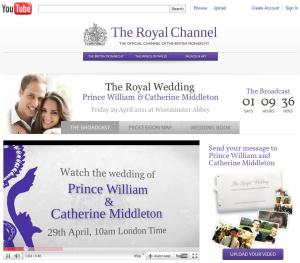
Jumping on the Royal Wedding bandwagon

As a Brit, I’m actually quite excited about the forthcoming nuptials of William Wales and Catherine Middleton AKA Wills and Kate; mostly because I want to see what she and the lady guests will be wearing. The media frenzy since their engagement was announced last November has been incredible. I can only imagine what it’s like back in the UK having been out in Australia since February, but even out here it’s huge. All the main TV channels have sent their key presenters over to London to cover the ceremony and everything they can possibly think of before and afterwards. A lot of people can be forgiven for getting ‘Royal Wedding fatigue’ before it’s even happened, but there have been a few companies, brands and quirky products that have caught my eye and shown that, with a bit of clever creative thinking, it’s still possible to stand out in a crowded arena.

1)      T-Mobile

Known for their ‘flash mob’ style adverts, which have caused surprises and smiles in places such as London’s Liverpool Street station and Heathrow Airport’s Terminal 5, the mobile phone company created a spoof video of the Royal Wedding party dancing down the aisle. The video went viral, got a lot of media coverage, especially in the UK, and created a lot of positive sentiment for the company and its ‘life’s for sharing’ strapline.

2)      Legoland

A theme park in Windsor, UK, based around the popular children’s toy, Legoland decided to stage its own Royal Wedding outside its model of Buckingham Palace. Brilliant product placement and a great way to show the versatility and humour of the brand, it also manages to get in messages in the media coverage about its 15th anniversary and opening times.

3)      William Hill

Well-known UK bookmaker William Hill released its Royal Wedding odds earlier this week. It has actually been keeping the media updated with the odds on various different circumstances to do with the wedding long before they actually announced their engagement. What makes the story stand out is the obscure things they’ve managed to give odds for (and getting an exclusive with the BBC, which is quite strict in its promotion of brands). Odds on Wills being stood up at the altar? 100-1. What colour will the bride’s dress be? What will they be eating? What will the first song be? Which celebrity will be the first to arrive on the BBC’s coverage? Other bookies Ladbrokes and Paddy Power have also got in on the act. They’ll be taking bets on pretty much anything!

4)      KaTEA

It’s stupid but it made me laugh – a German company ‘Donkey Products’ managed to get worldwide coverage for its ‘KaTEA and William’ teabags, which make the Royal couple look like their having a bath in your tea cup.

5)      The Royal Family

The Royal Family itself is getting with the times and announced that all coverage of the wedding will be on its very own YouTube channel. Coverage starts at 7pm Brisbane time!

And finally, it’s a friend of a friend but this spoof music video of ‘K Mid’ rapping about her 99 Problems is ‘totes’ worth a watch!

Media Storm of the Month – March 2011

This is a new regular blog-slot where we look at a news story that has taken off in that month.

March has been awash with controversy and genuine news, from the aftermath of the Christchurch quake to the even more tragic Japanese earthquake and its resulting tsunami, rising death toll and imminent nuclear meltdown. Not to mention the  scandal in the AFL with player manager Ricky Nixon and allegations of misconduct with a 17 year old girl, to Charlie Sheen’s outrageous public outbursts and increasingly weird behaviour to the prospect of war with Libya and more floods in Queensland and New South Wales.

The story we’re going to touch on as a Media storm of the Month though is the story about the YouTube video of the Year 10 Sydney student being bullied by a Year 7 boy. The story broke around the time of the National Day of Action against Bullying and Violence. A video was posted online of a much smaller boy punching another boy in the face and body; after several rounds the larger child suddenly retaliates, lifting the smaller boy off the ground and smashing him into the ground and leaving him to stagger off.

Daily Mail grab: http://www.dailymail.co.uk/news/article-1368886/Bully-bodyslammed-Casey-Punisher-says-s-sorry-blames-victim.html

Something that should have been sorted out by the school, the boy’s parents and the boys themselves has, thanks to the huge popularity and growth in social media and online networking sites, grown out of all proportion.

There was media outrage at the video and the attack and we now know that the larger Year 10 boy is 15 year old Casey Heynes, who has been bullied most of his school life and considered committing suicide last year, and the bully is 12 year old Ritchard Gale.

Both boys are now part of a media circus with interviews on major TV networks and coverage in all the main newspapers.

It has aired some interesting points and, it can’t be denied, was ‘good timing’ for a national bulling campaign. It has sparked a debate about bullying and violence in schools making other children affected not feel alone. Anti-bullying and children’s help charities such as Headspace, BeyondBlue and Kids helpline have all been able to jump on the bandwagon getting out their messages and contact details for all the other children who might be in need.

But the talk is also about what is it right to do to stand up for yourself? Casey had obviously been provoked and bullied for a long time, but was it right for him to retaliate with such force?

And how about the boy who filmed the whole incident on his mobile phone, shouldn’t he have been reprimanded as well? Should mobile phones be banned from schools all together? What can we do about this apparent rise in ‘cyber’ bullying?

But also, do children need to be protected from the media and journalists? In their desperate quest for ‘exclusives’ and ‘scoops’ the television news shows particularly escalated the issue and have effectively given credence to a schoolboy disagreement by asking ridiculous questions and adding weight to immature thoughts and feelings. Channel 9 even apparently showed Channel 7 interview coverage and claimed it as its own. A story about a schoolboy fight provoking a media battle, what is the media world coming to?

Good photography pays in PR

A while ago we discussed the importance of having appropriate photographs for press purposes (visit our previous blog here). Having a quality photo ready for media purposes can often make the difference between securing a full page feature or receiving a small mention in an article. Keeping journalists happy is our number one job so having the right tools to do this will enhance the results generated.

The only challenge we face in selling the idea to clients is that professional photos come at a price however, there are a myriad of ways to use the images and ensure you get the most value from a shoot.

Save on creative design

Purchasing photos for business use from sites such as iStock can be a nightmare. Royalty fees are often excessive (depending on the medium) and you can be charged per use making it an extremely expensive exercise.  The other danger is you are not guaranteed exclusive use of a photo and other brands could share your ‘unique’ identity. Hiring a photographer to take shots of events, staff, services, products or property will actually save you money in the long run and ensure any images will be better suited to bring your brand to life.

Fake paparazzi at events

Even a hint of free publicity is enough to make any CEO or businessperson smile. Though they aren’t ‘real’ paparazzi, professional photographers at your event will make guests feel special. Send the pictures onto the media later for post-publicity or use the images for future invites/ marketing materials. They can also be used to populate your social media sites.

Brilliant branding

Don’t make the mistake of cheapening your brand by using inferior product images in catalogues or other marketing materials.

A picture can tell a thousand words so make sure your product pictures don’t say ‘average’. A good branding photograph will often convey a ‘mood’ to build a strong emotional connection to your product.

Poor branding, poor positioning, boring, unprofessional

Shot 1: Does this make you want to buy this product?


Shot 2: Does this make you want to buy the product?

For more detailed information on photographs and a full list of official commercial photographers, visit http://www.aipp.com.au/

Going places… understanding Location-based Services and Geo-tagging in social media

 Social media continues to get bigger and new ways to use the medium are being introduced at a rapid rate.

 In this blog we are going to take a look at (and explain) social media location based services, geo-tagging and the potential these applications have for building brands.

Location-based Services (LBS)

A Location-based Service (LBS) is an information and entertainment application that can be accessed from a smartphone or mobile device. These services are growing in popularity with businesses increasingly using LBS to generate leads and enhance brand awareness.

Geo-tagging

Geo-tagging is a tool that utilises Global Positioning Systems (GPS) in smartphones to assist users to identify a particular place or location. It is used at a local and global level to enable promotion of real-time activities, merchants or locations through social media sites including Twitter and Facebook. Recently geo-tagging has been touted as the next big thing in the social media space.

 Who currently uses Geo-tagging? Anyone who has a smart phone with GPS or has access to the internet and associated social media sites can use geo-tagging. Consumers are using it to let friends know where they are and to get special offers and deals from retailers etc. It is used in gaming applications such as Foursquare, MyTown and Gowalla.

 Businesses are using geo-tagging to offer real-time  promotions or specials and to increase brand awareness.

 FOURSQUARE

What is it?

Foursquare is a location based social network application that incorporates gaming features.

Foursquare defines itself as ‘a mobile application that makes cities easier to use and more interesting to explore. It is a friend-finder, a social city guide and a game that challenges users to experience new things, and rewards them for doing so.’

Foursquare lets users “check in” to a place when they’re there, tell friends where they are and track the history of where they’ve been and who they’ve been there with.

In operation: March 11, 2009

Current number of consumer users: As of August 2010, Foursquare had 3million users worldwide.

Current number of registered users for business: Approximately 15,000

Quick breakdown: Foursquare is a game where users compete for points to win the status of being the ‘mayor’ of a location. It’s a good application for retail businesses as you can incorporate offers and help build customer loyalty

Cost: $0 to join or register a business. Cost of developing an application for a business varies

Best use by a brand we’ve seen so far: Starbucks Coffee

Our verdict: Claim your business name/place now, worth investigating if you have an extensive number of stores and targeting younger generation

FACEBOOK PLACES

What is it?

A location based application for Facebook users that allows users to check themselves or others in from a smartphone

In operation:  August, 2010

Current number of users: Approximately 30 percent of 500 million Facebook users but growing every day

Quick breakdown: Facebook Places allows users to check themselves into locations or places. It also allows friends to check other friends into locations as well. Easy to add locations and incorporate into Facebook business pages.

Cost: $0 for consumers. Businesses can register their location Facebook for free but you will need a business page first.

Best use of a brand we’ve seen: Too early to have any big players – but any business who is already heavily involved in Facebook and has multiple locations will be well placed to take advantage of Places as it grows.

Our verdict: Still in the early stages however, sure to grow with the popularity of Facebook. If businesses start offering incentives and offers to users to ‘check in’ (similar to the Foursquare model) it will gain popularity.

Places is also good for increasing brand awareness and connecting with Facebook users in real time. When people check into areas nearby to your business your listing comes up automatically.

GOWALLA

What is it?

Gowalla is a mobile and web service that gives people a new way to communicate and express themselves through the everyday places and extraordinary settings they enjoy.

Gowalla definition: ‘People can capture and share their spot in the world with friends and family, while discovering new places, events and trips as they go. Gowalla offers businesses, campaigns, and organisations the unique opportunity to reward loyalty, reach new consumers, and to create memorable experiences.’

In operation: March 13, 2009

Current number of users: 340,000

Quick breakdown: Gaming application (similiar to Foursquare) except it is built around obtaining stamps in a virtual passport – global. Users can accumulate points, rewards, discounts and badges. Businesses pay for a service to have their store listed or featured on Gowalla.

Cost: Free for consumers, businesses can get a featured listing from $155 US per day.

Best use of a brand we’ve seen: CNN Money for content distribution

Our verdict: Declining popularity compared to Foursquare, too niche market.

Creating media magic – the importance of appropriate photographs

One area I have discovered a lot of businesses will overlook is the way their company is visually represented in the print and online media. And I’m not talking about websites, design or logos – I’m referring to photographs.

It never fails to amaze me how much money companies will spend on improving their online presence, or various other aspects of their business, yet quality photographs of staff and products won’t get a second look.

Many regional newspapers, magazines and online sites will only have one or two photographers. These photographers are often freelance photographers (contract) who will only work at the media outlet part-time.

What this means when you are pitching to media is that the chances of a regional/small media outlet setting up a fresh photograph to go with your story, or product, is pretty slim. This doesn’t mean it won’t happen. It just means you are competing with the thousand or so other stories which also need photographs. Editors need to fill space. They also need to meet a quota of stories and have appropriate photographs to go with them.

If you are on a deadline – your photographer is already booked out – and you have a choice between a story with a photo versus a story with no photo the chances are the story with the photo will win out every time.

Of course saying that, the larger media outlets will always want to own copyright and have their own pictures…

If a company does have images for media a lot of the time these images will be old or outdated. You know the ones – the fresh faced CEO who looks about forty but when you meet them in person they are really sixty and look nothing like their official media photograph?

There is nothing the media hates more than a (pr) company sending them pictures to accompany stories which represent their clients -or products – in a falsified manner. Media outlets don’t want old images or ones which look dodgy and outdated. It reflects on the quality of their publication. Media outlets want a variety of quality images which accurately portray whoever or whatever it is they are writing about.

They also don’t want to print the same thing as all of the other media outlets you’ve sent your story to.

It is crucial your brand aligns with images which accurately represent the business products and which fit the overall brand strategy. If you are going to push products, staff and employees of your business in the media its important to make sure they are presented in a way which fits in with the overall marketing strategy of your business. Social media also needs to be addressed in this regard but that is a whole other topic altogether.

Depending on the size of your business and what is being promoted in the media realistically you should be looking at indulging in professional photography shoots at least once a year. If you can’t hire someone it is still easy to update your media images. All it involves is finding an amateur photographer and allocating time and resources to make it happen.

The best part about professional media shoots is that your company will own all of the images afterwards – you can reuse these images in marketing material, or online, as you choose.

Quality photographs are an excellent business tool and will always help to enhance your media coverage.

Claire Kelly – Media Relations Manager, Ignite PR and Marketing

Is the audience listening? The compounding value of market research and targeted PR.

Last year I began managing the public relations for a new client in the retail franchising sector. Following our first meeting I received an email from the client with their ‘brand strategy kit’ of about 30 pages attached.

Contained in the kit were results of market research, which had allowed the client to glean to following facts about their customer base, among others:

 • Young, suburban, singles couples and families

 • Almost 2 in 3 under 40 years of age

• Children under 12 years of age

• Very regular take away eaters

From this research our client had further categorized their customer demographics into three general categories with specific characteristics assigned to each. I was also provided with research on the current market perception of their brand, a map of their key competitors and a copy of their brand values statement.

After examining the kit, I was struck by how ‘ready’ the company was for PR. They were ready because, as a business, they were able to confidently answer one question:

Who do you want to talk to and why?

In my experience, unsuccessful PR, from an ROI point of view, is often engaged and executed too early, too late, or too broad.

Too early might occur when a business is only semi operational or in start up phase. The business owner may be desperate to get some exposure but isn’t quite sure who the market for the product actually is. In the long term, this kind of ‘ready, fire, aim’ approach to marketing and PR can do a brand more harm than good.

Too late is often either when a product is bad and this has affected sales, or when a brand’s reputation is damaged. Damaged reputations can sometimes be mended over time with the help of PR, bad products, however, almost always remain bad products.

Too broad arises when clients don’t think strategically about their communication goals (and do not listen to the advice from their PR agency). Let’s say a client has a new product. It is a niche piece of medical equipment to be sold into hospitals. The client may want a spot on the 6pm news, but is this really the best place for the product to appear? How many of these viewers are potential buyers of the product? Probably less than one percent. The right location for editorial on such a product is respected medical journals, online and print industry media, targeted TV and radio segments and the medical sections of the major papers.

Avoiding the aforementioned pitfalls is made much easier with a strong customer profile to fall back on when in doubt. So before you jump into bed with your marketing or PR agency, consider how much you really know about your customers? If the answer is ‘not much’ spend the time and money to properly determine your target market (or least listen to your current PR agency if they advise this step and let them help you reach the right market).

Joseph Keller, Account Manager

Trends for 2010

The end of 2009 is fast approaching and here at Ignite we’ve been busy wrapping up activity for clients and finalising marketing plans for 2010.

I’m sure many of you are used to seeing the “top 10 trends for the coming year” float into your inbox or appear in articles or blogs around this time each year, but if you are an SME you may find yourself thinking “well that’s great but I’m not sure how I can capitalise on these trends?”

Let’s look at three top trends for 2010.

1. The rise of a more demanding consumer

As globalisation continues consumer expectations and demands continue to increase, which means the companies that will be successful will be those that move with their target market’s desires and preferences.

So what are you doing to ensure you know the desires and preferences of your target market? It’s a given that social media has exploded in popularity, so if your target market is using social media sites such as Facebook, Twitter, LinkedIn, Bebo etc it would be smart to ensure you are on those sites following what they are saying about your brand.

Having said that, there is no sense in having a social media presence just because everyone else is, particularly if your target market is not using that media. Perhaps your target market share their ideas and opinions via a particular radio show or industry publication. Perhaps you need to do an online survey of your database – there are a few cost effective options available such as www.surveymonkey.com – to gauge their views and opinions. Think outside the box but always keep your target market in mind.

Also, remember, an integrated marketing approach  always work best so try to incorporate a full communication mix – Public Relations, Strategic Marketing, Advertising (print, radio or online), Local Area Marketing.

1. Virtual networking merging into face-to-face networking

Online lifestyles are prompting “real world” meet ups and are shattering all predictions about a desk-bound, virtual, isolated future.

You can actually be a part of this by joining groups that share common interests with you and participating in face-to-face meet ups. For example, one of my colleagues here in the office is a regular Tweeter virtually meeting and interacting with a number of professionals in our industry who are interstate. When she tweeted one day that she was planning a holiday in Sydney a few of those interstate contacts were interested in meeting with her in person.

Our agency has also made a number of business contacts through Twitter which we have been able to call upon when in need of particular experts for specific client campaigns. We have proceeded to meet with these business contacts in person and developed strategies with them for our clients.

2. Increase in risqué marketing techniques

2010 will be even more opinion-driven, outspoken than 2009 thanks to the “anything goes” online world. What will you do to follow this trend?

It’s not about necessarily engaging in guerrilla marketing tactics but it is about thinking creatively to strategically catch the attention of your target market and stand out from the crowd. Some good examples of brands/companies which have done this in 2009 are:

These are a few of my thoughts and experiences but of course you can do some strategy planning by doing a bit of your own research on trends for 2010.

Happy planning!

Lyla Lopez – Account Manager

Tweeting away the day @ work?

A contact I follow on twitter recently notched up their 10,000th tweet.

Fantastic, I thought, I wonder how long they’ve been tweeting? Well turns out they have only been a user since February 2009. In a flash of calculator driven mathematics not seen since high school I suddenly found myself furiously bashing out statistics.

1,111 tweets per month, I said to myself aloud, 37 tweets per day.

Now here’s where it gets interesting.  Let’s assume they sleep for an average of six hours per night, (The Australian average is seven to eight hours) and let’s also assume they don’t sleep-tweet. If both these assertions are true, then during waking hours they tweet twice an hour, every hour, every day! Calculating to 40 minutes a week on Twitter and this does not account for time spent reading tweets.

This lead me to consider how much tweeting is too much? The fact I ponder this question may have some crying – ‘You don’t understand the benefits of social media, you haven’t watched the latest digital webinar podcast, you obviously didn’t attend the last social media marketing drinks on your boss’ time!’

Alas you are mistaken.  I’m a 25 year old gen Y and social media addict. Hell, I even watch the odd webinar!

So what’s the point? Simply this: If we as marketing, media and communications professionals are going to continue zapping large chunks of work time on Twitter, perhaps we ought to give some consideration to our posts.

Open up the conversation

Twitter is awash with marketing and communications professionals talking to other marketing and communications professionals about marketing and communications. Is there someone else on Twitter you would like to be talking to? If the answer is yes, what do you need to say to engage them?

Engage more

I have seen it many times where some Tweeter will ask for feedback on a topic, recommendations for products, or ask some relevant poignant question only to receive minimal response. Why? Where is all the ‘engagement’ that is so imperative to making social media work?

Consider your content

There’s little merit in grandstanding about the amazing benefits of social media if your tweets are limited to insightful gems like ‘Just ate bacon and eggs for breakky’ or ‘taking the dog for a walk now’. Just like the real world, the most effective methods for opening communication channels are sharing interesting or relevant information and asking questions.

Don’t over retweet

It’s annoying when someone in the office re-sends that funny email which everyone has already seen right? The same applies to re-tweets. If it’s all over Twitter, does it need your RT?

Change the subject

Do any of us really need to read another blog about social media? (oh the irony) There’s so much amazing content which doesn’t make its way to the Twittersphere. Be original, informative and entertaining with the links you post and stand out from the crowd!

– Joseph Keller, Account Manager