Driving award success with PR

Late last year we gave you tips on how to prepare a great award submission. Last week we put together a list of some of the business awards coming up across a number of categories this year including the BRW Fast Franchises List, Telstra Business Awards and Franchise Council of Australia Excellence in Franchising Awards. We also talked about how entering awards can benefit your business but what we’ve only touched on is how to maximise award success and leverage the credibility that comes with it. 

We’ll touch on a few common tactics used and you’ll learn that sometimes it doesn’t matter if you’re first or fifth. What does matter is timing, making sure your tactics are prepared and executed on time so you’re not announcing your success when it’s too late.

Before the winners are announced

“Congratulations”, says the email. “Your company has been shortlisted for the 2012 Amazing Company of the Year Awards”. Some awards will let you know you’re in the running which means it’s time to put your PR hat on.


Prepare your message. Be clear on what to say if you win. Firstly, the General Manager or CEO should be the nominated spokesperson for interviews. Some key information you should have prepared are company initiatives (ie the projects that won you the “green” award, for example), sales and profit growth (it might not always be appropriate to boast your exact figures but % growth still shows your company had a strong year) and the other elements contributing to your company’s success.


Prepare a media release. In the weeks or days leading up to the announcement prepare a media release detailing all the above juicy information about your company. What is it that really differentiated your company in the market that year. This is what you’ll use to send information to journalists and key media contacts and it should be ready to go out as soon as the announcement is made.

Look for relevant features. BRW sends all shortlisted franchises an editorial survey to complete prior to the announcement of its Fast Franchises List. If you get an email like this make sure you reply as your responses are used for feature stories. In fact, get in touch with any publication – print or online – that generally covers the award you’ve entered to ask about what feature stories it may be developing and if your company has experienced the trends or themes they’re writing about let them know.

After the winners are announced

Pitching. Get your media release out to all contacts relevant to your award. Everyone will be doing this so make sure your point of difference is clear. Continue to follow up with your contacts keeping in mind what it is about your company’s success that is most interesting to what they’re writing about.

Credibility of an award. Winning an award highlights you as an industry leader or innovator and has the potential to attract new clients and customers. Let stakeholders know – customers, suppliers etc. All suitable touch points of communication (company website, email signatures & business cards, company letterheads, newsletters, collateral and brochures) should mention your win also. Use the award’s logo and a brief line similar to as follows. ie. 2012 Small Business Awards Winner (logo).

Social Media. Social networking sites are another great way to reach out to your audience (ie. use hash tags likes #telstrabizawards on Twitter or announce your win on your business’s Facebook page) and share any exposure you may receive as a result of your award success.

Not the best but among the best

We encourage our clients to enter awards that are relevant to their respective industries. Often, companies won’t enter awards if they don’t think they’ll win. Our experience has proved it sometimes doesn’t matter if you win, so long as you’re seen among the best.

Two of our clients made the 2011 BRW Fast Franchises List last year. Pool and spa care franchise PoolWerx made the list for the eighth consecutive year while home appliance rental franchise Mr Rental made it for the first time and we achieved positive coverage for both of them for very different reasons. For PoolWerx, it was about what the company was doing to remain at the top for a number of years. For Mr Rental, it was about what strategies over that previous year had lead to its business success and resulting recognition among the top franchises in Australia.

Over the past five years, Ignite PR & Marketing has had success entering its clients  in awards including BRW Fast Franchises List, Telstra Business Awards, BRW Fast Starters, Ernst & Young Entrepreneur of the Year, BRW ANZ Private Business Awards, ActionCOACH My Business Awards, Franchise Council of Australia Excellence in Franchising Awards. If you’d like further advice on entering your company in business awards get in touch with Ignite here.
Writing a great award submission

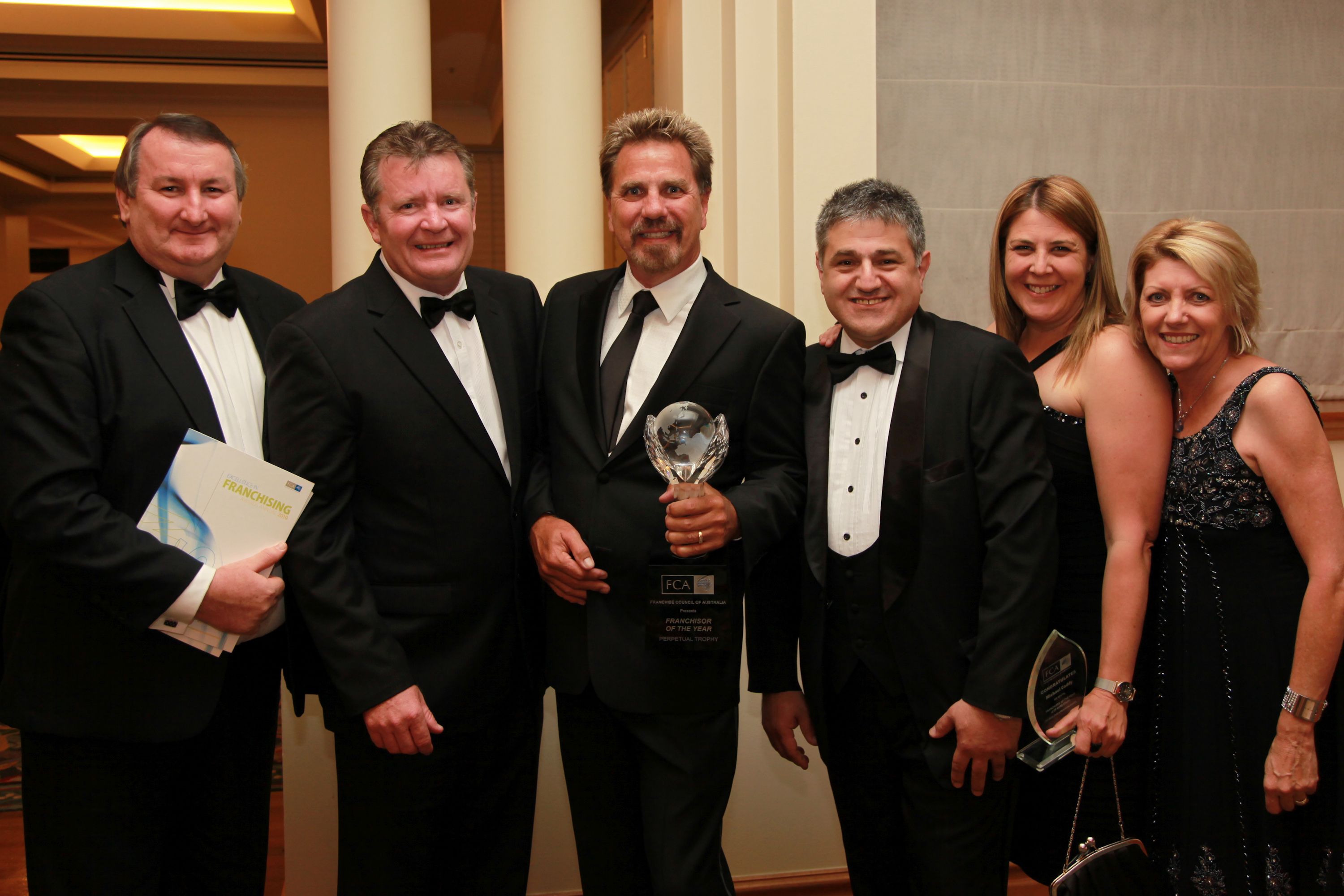
Last year, our client Mr Rental won the title of ‘Franchisor of the Year’ at the 2010 FCA (Franchise Council of Australia) Excellence in Franchising Awards. The PR potential from winning an award is huge and in light of the FCA awards that happened this week, we thought we’d share some advice on why you should be thinking about entering your company in business awards, and provide tips on how to prepare a good award submission.

Why would my company want to win a business award? What are the benefits?

We always encourage clients to enter business awards because of the opportunity they have to receive great recognition. It gives you fantastic PR and media opportunities both within your respective industry and through broader media channels, which allows you to reach a wider audience. Business awards highlight industry leaders, reveal innovative processes and products and ultimately attract new clients and customers to your business. An award win also boosts company morale and attracts top talent.

Where do I find awards opportunities?

The nature of your business will determine the categories and types of awards you should be entering. Your industry’s governing body is usually a good place to start for industry specific awards. Some major national business awards we encourage our clients to enter each year are BRW Fast Franchises, BRW ANZ Private Business Awards, Premier’s Sustainability Awards (VIC), Westpac New Zealand Franchise Awards and the FCA Excellence in Franchising Awards. Businesses can also find awards at a local level through council websites and the local chamber of commerce.

How to prepare an award-winning award submission

1. Read and understand award criteria. Criteria are a guideline to help you structure your award submission and a standard by which judges compare different entries. It is therefore crucial to understand them. Different sections are usually weighted differently and it is important to understand the areas requiring greater attention. Information seminars are often held to explain the marking criteria and offer tips and advice on completing the award. Understanding the criteria and submission requirements as soon as possible will ensure you have ample time to manage its completion.

2. Prepare brief responses to award questions. Once you are familiar with the criteria, go through the questions and requirements and jot down brief answers ensuring you address key points of the question reflecting your company’s key strengths and points of difference. After this, you should have a good understanding of the layout of your submission and what supporting information will be required.

3. Prepare supporting information. Anything you mention in your submission about company performance should be supported with evidence where possible. Things like sales performance, customer growth, brand awareness etc should all be supported with graphs and figures. This section usually calls upon specialties of other team members (ie operations, marketing) so it is important the award writer gives them enough time to gather such information.

4. Begin writing draft submission. Now that you have good outline of what you will write and supporting information on its way it’s time to start fleshing out the first draft of your award submission. Address each point of the question in limited detail without waffling on or exceeding word limit. Always remember the weight each question or section bears in relation to the overall criteria. Leave all references to supporting information as “Appendix blank” as this is something likely to change before the final version. Make sure the key information is included in the answer and the award reader doesn’t have to refer to an appendix for this.

5. Editing. Make sure the wording used in your submission is consistent, flows nicely and is easy for the reader to understand. Check for word economy and where sentences can be shortened. Ensure word limit isn’t exceeded for each section responses address questions properly. You can now reference any responses requiring supporting information ensuring all graphs, statistics etc are labelled and clear. Again, ensure your company’s strengths and points of difference are still highlighted as sometimes they can be lost in editing. Ensure anyone who has contributed information to the submission is satisfied it has been used accurately. Hand the submission over to a colleague to proof read before sending it to your General Manager or CEO to ensure it is aligned with the company’s overall mission and objectives.

6. Design, formatting and submission. When your submission is ready to be designed to your company’s branding standards, ensure it reflects the award’s formatting requirements. Make sure all graphs and appendices are displayed correctly as sometimes this changes when reformatted. Ensure all required documents like criteria sheet or front page are included. Give the award one final proof before printing, binding and submitting via the correct methods.

Key features of a great submission

1. Eye-catching and easy to read

2. Clear profile of your company and its core offering

3. Clear responses meeting key requirements of questions

4. Clear and appealing graphs and illustrations

5. Great supporting evidence to explain responses

The more time you put into an award submission, the better it will be. Leaving an award until the last minute will mean you’re not giving it its full potential to reflect your organisation. Using each team member to provide information on their function allows the true strengths of your business to be known.

Keep an eye out for upcoming award opportunities as it might just be your time to shine.

Share this post: Add to FaceBookAdd to StumbleUponAdd to Twitter

6 Questions: Emma Malone, Editor at CGB Publishing

Next up in our 6 Questions series finding out how journalists like to work, any issues they have with PRs, how they like stories to be pitched to them etc, we chat with Emma Malone Editor at CGB Publishing.

1)      What is your deadline day/ time?  CGB Publishing has three different magazines, Business Franchise Australia (published six times a year) Business Franchise New Zealand (published four times a year) and the Franchisor (published two times a year).  Add to this the Franchise Guide – a full length book (published annually) and the Franchise Directory (published annually) and there is no day or time when we do not have a deadline!

2)      How do you prefer to be contacted (i.e. email, phone, fax, post)?  I prefer an email followed up by a phone call.  It gives me a chance to review the information and see if it would be of any value to our publications.

3)      Is there a particular time of day you prefer to be contacted?  Preferably late morning. This gives me a chance to catch up on the mountain of emails and action items first.

4)      Do you like to meet companies and bosses for coffee/ lunch? If yes, do you have any favorite venues?  I would love to meet for coffee, but our deadlines don’t really allow for this.  Emails and phone calls are much more effective for my schedule.

5)      What are your three pet peeves about PRs?  I am not sure I have pet peeves.  PR firms have a job to do, just like the rest of us.

6)      What would the perfect story pitch be for you? And what’s the best PR pitch you have ever had?  There is no perfect pitch – at least not that I have seen (yet) – I appreciate PR people who tell me about the company, what they are trying to achieve and what they would like from our publication – no sales dances.

Share this post: Add to FaceBookAdd to StumbleUponAdd to Twitter

Good photography pays in PR

A while ago we discussed the importance of having appropriate photographs for press purposes (visit our previous blog here). Having a quality photo ready for media purposes can often make the difference between securing a full page feature or receiving a small mention in an article. Keeping journalists happy is our number one job so having the right tools to do this will enhance the results generated.

The only challenge we face in selling the idea to clients is that professional photos come at a price however, there are a myriad of ways to use the images and ensure you get the most value from a shoot.

Save on creative design

Purchasing photos for business use from sites such as iStock can be a nightmare. Royalty fees are often excessive (depending on the medium) and you can be charged per use making it an extremely expensive exercise.  The other danger is you are not guaranteed exclusive use of a photo and other brands could share your ‘unique’ identity. Hiring a photographer to take shots of events, staff, services, products or property will actually save you money in the long run and ensure any images will be better suited to bring your brand to life.

Fake paparazzi at events

Even a hint of free publicity is enough to make any CEO or businessperson smile. Though they aren’t ‘real’ paparazzi, professional photographers at your event will make guests feel special. Send the pictures onto the media later for post-publicity or use the images for future invites/ marketing materials. They can also be used to populate your social media sites.

Brilliant branding

Don’t make the mistake of cheapening your brand by using inferior product images in catalogues or other marketing materials.

A picture can tell a thousand words so make sure your product pictures don’t say ‘average’. A good branding photograph will often convey a ‘mood’ to build a strong emotional connection to your product.

Poor branding, poor positioning, boring, unprofessional

Shot 1: Does this make you want to buy this product?


Shot 2: Does this make you want to buy the product?

For more detailed information on photographs and a full list of official commercial photographers, visit http://www.aipp.com.au/

Connecting with your social media community

With the continuing evolution of the social media sphere, we are finding more and more clients are looking towards social media networks to generate leads and raise awareness about their brand.

However, the way most companies are approaching social media is fast and furious.

You can rush things through to catch up with everyone else but if you haven’t thought your approach through properly you won’t get the desired results.

For some this topic might seem a bit ‘101’ Social Media but we continue to come across businesses that don’t really understand how it works and the power it possesses in influencing a brand positively or negatively.

Social media is a real-time medium that has to be approached differently to other mass-advertising channels. Social media networks are more about the ‘soft sell’ rather than the hard sell – no-one likes being sent hundreds of spam emails or receiving unsolicited telemarketing calls – and your social media community is the same. Blatant advertising material on social media channels is unacceptable as most people have joined for a bit of fun. The exception to this is when it is a specific promotion page and people are aware of this when they sign/ join up/follow.

With this in mind, it is important to have clear objectives for why you want your brand or business to engage in social media. Is your target market reached easily via this channel? It’s not good enough just to be ‘on’ it.

Brands can benefit  from building genuine connections with the market on social media but it needs to be consistent with the overall marketing strategy, which includes integrating above and below the line elements. Social  media requires a a long-term commitment but there are a few things you can do to engage fans quickly and easily. Simple things like asking questions or running specific online promotions through applications are two strategies that encourage engagement.

Roger Federer is one of the biggest sports brands in tennis (and sport in general). Part of the reason he continues to remain popular with both sponsors and fans is through his innovative approach to social media. Roger and his team consistently put in efforts to connect with his Facebook & YouTube fans and this has paid off with his number of Facebook fans recently hitting 4, 811, 836. His comments and videos regularly attract feedback in the thousands. I am sure many of you are aware of his recent video for Gillette, which went viral on the internet

The screen capture below is a great example of a recent post he made calling  for fans to ask him any questions they would like answered. Note: this one post attracted 9, 261 comments and 13, 9223 ‘likes’ – one of his less popular ones!

'The Fed' is a social media ace

 You will notice it actually seems like Roger himself is using this page – it is not all marketing material and this is a key element in its success as a fan page.

As a business owner it’s important to start with the end goal in mind so before doing anything consider what you really want to achieve in the social media sphere then act accordingly. Do research, check what competitors are doing and ensure you are familiar with social media tools so you can truly understand how it works and can be applied for your business.

If your business is already engaging in social media, assess how successful it is and  make sure there are consistent efforts to engage and connect with the online community.

Social media is a powerful communication tool but it is not a one size fits all medium.

The franchise tug of war – maximising PR for franchisee and franchisor

 Ignite PR & Marketing works with a wide variety of franchises and one of the key elements of support we provide is generating publicity for franchisees at a local level.

Specialising in providing public relations for franchises is at times a difficult task due to the complexities involved with managing the relationships and expectation of both the franchisor and franchisee.

A common issue we come across involves managing media for individual franchisees. Sometimes this process is laboured as franchisees may not deem a PR project a priority over the day to day running of their business. Sometimes they don’t return calls, approve press releases promptly or assist us in providing the right information to make a strong story. The franchisor will still expect strong results but we have found they can help the relationship, and maximise the power of PR for franchisees.

The most successful franchise companies let their franchisees know the value and importance of media coverage. They hold media training days, Q&A sessions and brief franchisees on the importance of wearing correct uniforms during photo shoots etc. They inform the network of media releases going out on their behalf and assist them as much as possible. It is crucial the franchisor communicates what public relations campaigns they are running with franchisees so they know how to deal with media when they call.

So what can be done to ensure both parties get the most out of utilising a PR agency for franchising development?

Franchisees can inform the PR department of any interesting community events they may be sponsoring, return calls and enquiries to the media or agency promptly and assist in developing or sourcing information for stories. They can make sure they represent the brand and company well (ie. keep logo/brand in shot in photographs etc). And be willing to be involved in any media opportunities thrown their way.

Franchisors can keep all current contact details up to date for franchisees, ensure that they have accurate and current high resolution photographs on file of each owner, inform franchisees of the PR company they are working with and also email out appropriate media releases to franchisees so they are across all media opportunities. It is also a good idea to hold some basic media training at your national conference so franchisees understand what is expected of them and are aware of how effective media coverage can be.

Ignite PR & Marketing specialise in providing PR for franchises and can help raise awareness of your brand. If you have any questions about franchise PR, please feel free to contact us on 07 3368 1650.