At presentation skills training it’s always drilled into you that it’s not necessarily what you say, but how you say it. So you could be delivering the most brilliant speech ever, but if it’s done badly – mumbling, monotone, no eye contact, etc – then you may as well be reciting a nursery rhyme for all that your audience will take away from their experience. Perhaps a little extreme, but one aspect of delivery is body language. It’s a key part of how you present yourself, whether it’s in a speech, an interview or presentation. Every eyebrow twitch, hair twirl, eye movement or leg-crossing can indicate something about you.
Whilst we’re certainly not experts on the subject, we’ve done some research to offer you some top tips on understanding body language so that you can hopefully make it work in your favour.
1) First impressions really count. When first meeting people it’s vital to make a good impression – make sure you have a firm (but not too firm) handshake with no sweaty palms; make proper eye contact (but don’t stare); be alert, if sitting down make sure you have a relaxed but upright posture.
2) Learn the art of ‘mirroring’. This is when you pick up gestures and tone from a person and ‘mirror’ what they are doing. When done in a subtle way this is often said to make people feel more comfortable in your presence as it’s often something that occurs between close friends and family members. Don’t be too obvious though as otherwise people might assume that you’re making a mockery of them.
3) Be ‘arm aware’. What are your arms and hands doing? Crossing your arms across your chest can be viewed as defensive, expressing opposition or being insecure; if sitting at a table, folding your hands in your lap or having them under the table can be viewed as untrustworthy; wringing your hands can be seen as a sign of nervousness; and when presenting an idea or talking be wary about being too wild in your gestures.
4) Respect personal space. Never get too close to someone, especially in a workplace situation, unless you know them really well. People can really take offence; it can create nervous tension and create a negative atmosphere.
5) Are you flirting with me? Women especially can have a minefield to manoeuvre round when it comes to body language being interpreted as flirtatious behaviour, for example stroking your neck (nervous) or fiddling with your hair (anxious). Be wary of this, especially when dealing with people of the opposite sex.
Another tip worth noting is for doing presentations and speeches – film yourself practicing and then play it back without any sound. You will notice any nervous ‘tics’ or repetitive actions as well as what works.
https://ignitepr.com.au/wp-content/uploads/2013/10/Ignite-WebLogo011.png00igniteprhttps://ignitepr.com.au/wp-content/uploads/2013/10/Ignite-WebLogo011.pngignitepr2011-07-05 09:55:362013-12-26 00:01:54The basics of body language
One of the previous month’s biggest stories has been a tragic one – the murder of a Gold Coast police officer Damian Leeding. Shot in the head late in the evening on Sunday May 29, his family then had to make the heartbreaking decision to turn off his life support machine.
The media coverage of the murder and subsequent funeral was extensive with all mainstream print and broadcast media covering the initial reports, the following progress of the officer and then his state funeral on the Gold Coast, attended by thousands.
The sheer scale of the response was huge. The power of the media was used for good as all the major TV stations were asking the public to donate to the Damian Leeding Remembrance Fund for his young family left behind – more than $150,000 has been raised so far, a huge amount for what might have been a small local charitable fund.
But as well as the heartbreak for Damian’s family and the tragic loss for his police colleagues, the media storm surrounding the current crime spree on the Gold Coast has further negative implications.
Local politicians have claimed it’s having an effect on education with foreign students cancelling their courses after seeing the recent stories in the news.
The evaluating committee for the 2018 Commonwealth Games, for which the Gold Coast is a contender, have had to make a statement saying that the crimes won’t affect Gold Coast’s chances of hosting, but it’s hard to see how it won’t.
If we want to help the Gold Coast now to try and stop these crimes happening we shouldn’t be deserting the area in its hour of need but keep visiting in our droves to keep the tourism and surrounding industry buoyant so that people can have gainful employment and less need for the drugs as a result of despair. It’s a simplistic viewpoint, but something worth considering. The media are doing their job in reporting the facts, but it would be good if they can help with the recovery as well.
Share this post:
https://ignitepr.com.au/wp-content/uploads/2013/10/Ignite-WebLogo011.png00igniteprhttps://ignitepr.com.au/wp-content/uploads/2013/10/Ignite-WebLogo011.pngignitepr2011-06-28 17:35:572013-12-26 00:01:55Media storm of the month – June 2011
How can you get others involved in your business challenges? And how can you incorporate the techniques used to encourage innovation within your own ranks?
Share this post:
https://ignitepr.com.au/wp-content/uploads/2013/10/Ignite-WebLogo011.png00igniteprhttps://ignitepr.com.au/wp-content/uploads/2013/10/Ignite-WebLogo011.pngignitepr2011-06-03 11:50:162013-12-26 00:01:55What is crowdsourcing?
Entering awards may be the bane of your life – it always takes longer than you think to write the entry so it’s usually a stressful rush at the last minute. So why bother?
Well, it’s very flattering to be nominated or asked to enter an award; if you get shortlisted or win it’s a fantastic boost for the company and the team; you usually get to go to a great party; it can help with new business; enhance your profile in your industry; give you a great opportunity to generate some publicity – both internally and externally; and the logos look great on the letterhead/ email signature/ website homepage.
Here we give our top five tips for writing award entries and some advice on how to go about finding awards to enter. (But rest assured we can do the hard work for you as well if necessary!)
1) Enter the right award: This might sound a bit obvious, but award entries take a lot of time and effort so it’s important to make sure that the award you’re planning to enter are worth it and that you genuinely think you have a good chance. Have a look and see what and who has won in previous years, if you can get examples of previous entries to work from do that too, but always make sure you put your own stamp on it. The process of actually entering an award can sometimes cause you to have a really close look at your business, your goals and what you’ve already achieved. The process itself can sometimes be beneficial.
2) Check the format: Another obvious one, but something that can easily be overlooked – do they want it written in the first or third person? Is there a word limit on the responses? Would it be advantageous to have your entry designed by a graphic designer to give it more impact? Do they want attachments? How do those need to be formatted? Does the entry need to be submitted in a specific format? Does it need to be posted or emailed – this could impact the amount of time you have and how you write it up?
3) Gather evidence: As well as you telling the judges that you’re great, you deserve the award and how could they possibly give it to anyone else, it’s probably a good idea (and most awards require it) to gather evidence to support your answers. Examples of documents, testimonials from colleagues or clients, presentations, press coverage… whatever fits the bill, make sure you use it to strengthen your case as the future award winning company or individual that you are.
4) Proof-read: You’ve come this far, you’ve decided which award to enter, you’ve agonised over the words, you’ve edited everything to within an inch of its life and now you’re almost ready to enter (well within the deadline of course) so don’t let a ‘smelling pistake’ or stray apostrophe or speech mark get in your way. It may sound small, but some of these judges are hard people to please!
5) Be prepared: You may be called upon to have a face-to-face interview as part of the awards process, this could turn out to be the interview of your life. Be prepared so you can enjoy it! Think you might enter a particular award next year, start preparing for it now, if there are particular criteria you need to fulfill what can you do between now and then to make sure you’ve got it covered? Always be one step ahead and you’ll find it much easier when it comes round to the entry writing process.
Where can you find out about awards to enter? There are lots of places to look – try your local Chamber of Commerce, local newspaper and council. Also look at industry bodies and associations, for example in the franchising industry the Franchise Council of Australia runs an annual awards scheme – every year we work drafting and editing entries for clients. Quite often industry and business magazines run awards schemes as well. And have a look to see what your competitors have won before and enter those too. Using a search engine such as Google is a great way to find information or register for a website such as AwardSync, which is a free service that lists awards across the country according to sector.
Good luck!
Share this post:
https://ignitepr.com.au/wp-content/uploads/2013/10/Ignite-WebLogo011.png00igniteprhttps://ignitepr.com.au/wp-content/uploads/2013/10/Ignite-WebLogo011.pngignitepr2011-05-23 12:41:192013-12-26 00:01:55How to write award entries
Public relations certainly isn’t all about media relations, but it is a major element. Knowing how to pitch stories and how to build relationships with journalists is a crucial part of our success.
One thing to think about is whether to pitch by phone or email. This can come down to personal preference, the nature of the story, how well you know the journalist you’re pitching to, the time of day. It’s not a broad brush approach, so think about this for every pitch you make. Journalists are more and more favouring email over phone calls, which can disrupt their day much more. Also, in this modern age of social media consider using services such as Twitter to pitch. There’s certainly skill in pitching a story in 140 characters and it’s direct and much more immediate.
Here are some other key things to bear in mind.
1) Know your story: this may sound obvious, but can you sum your story up in two or three sentences or a few bullet points?
2) Make it relevant: why should a particular journalist care about what you have to say? Even if you’re working from a news release that has been approved by the client you can vary the pitch and pick out different elements according to who you’re talking to. And don’t forget about the ‘extras’, e.g. interviews, exclusive additional content, photos, etc. Be targeted
3) Do your research: use media databases such as MEDIAtlas (paid-for) and MediaSync (free) to find contact details and the right contacts, but also try to look at a publication or website, listen to a radio station or watch a particular television show – know who covers what, what’s been covered on your topic recently and whether a particular journalist always wants exclusives
4) Respect deadlines: if you’re calling a journalist always check whether it’s a good time to talk, you don’t want to launch straight into a pitch if they’re on a deadline; it won’t be appreciated
5) Get to the point: even if a journalist says it is a good time to talk, make sure you get to the point (this links back to knowing your story) – they haven’t got all day; some journalists will receive many calls and hundreds of emails a day
6) Be professional: be friendly but don’t be over-pally if it’s the first time you’ve spoken to someone. With the first contact you have no credibility and no history, so it will take time to establish this
7) Don’t spam: similarly, consider whether a story really is relevant to someone, if you’ve made a media list using something like MEDIAtlas make sure there aren’t duplicates in the list so you don’t call or email someone more than once
8) Be available: if you’re pitching a story make sure you’re around and ready to deal with any requests or follow ups from journalists otherwise you could miss out
9) Follow up with caution: if you’ve sent an email pitch, don’t just follow it with a call saying “did you get my email?”, consider whether you can offer anything else – what justifies your follow up call? Perhaps in your email you can say “I’ll call in a day or two to get your feedback, unless I hear from you beforehand” – at least then you’ve given a warning!
10) Know when to give up: sometimes a story is perfect for someone, and you know it, so you keep trying, but sometimes you will be flogging a dead horse of a story so you need to know when to call it quits. If your story isn’t flying, think about why and what you can do to change this in the future, it’s our job as PRs to advise our clients of the best course of action after all
If you’re planning a long and illustrious career in the PR industry it’s vital to understand how the media works and how to work with the media. Think long-term relationships and making friends. If you do a journalist a favour, turn around stories quickly and efficiently, pitch the right things to the right people, you’ll make a good name for yourself and journalists will, in turn, listen to you.
What do you think? Are you a PR with a journalist pitch story to tell? Are you a journalist with strong opinions about how PRs pitch stories to you (this is most of you, surely?!)? Do you have anything to add to this? We’d love to hear from anyone with advice or anecdotes.
Share this post:
https://ignitepr.com.au/wp-content/uploads/2013/10/Ignite-WebLogo011.png00igniteprhttps://ignitepr.com.au/wp-content/uploads/2013/10/Ignite-WebLogo011.pngignitepr2011-05-16 10:00:152013-12-26 00:01:55How to pitch to journalists
As a Brit, I’m actually quite excited about the forthcoming nuptials of William Wales and Catherine Middleton AKA Wills and Kate; mostly because I want to see what she and the lady guests will be wearing. The media frenzy since their engagement was announced last November has been incredible. I can only imagine what it’s like back in the UK having been out in Australia since February, but even out here it’s huge. All the main TV channels have sent their key presenters over to London to cover the ceremony and everything they can possibly think of before and afterwards. A lot of people can be forgiven for getting ‘Royal Wedding fatigue’ before it’s even happened, but there have been a few companies, brands and quirky products that have caught my eye and shown that, with a bit of clever creative thinking, it’s still possible to stand out in a crowded arena.
1) T-Mobile
Known for their ‘flash mob’ style adverts, which have caused surprises and smiles in places such as London’s Liverpool Street station and Heathrow Airport’s Terminal 5, the mobile phone company created a spoof video of the Royal Wedding party dancing down the aisle. The video went viral, got a lot of media coverage, especially in the UK, and created a lot of positive sentiment for the company and its ‘life’s for sharing’ strapline.
2) Legoland
A theme park in Windsor, UK, based around the popular children’s toy, Legoland decided to stage its own Royal Wedding outside its model of Buckingham Palace. Brilliant product placement and a great way to show the versatility and humour of the brand, it also manages to get in messages in the media coverage about its 15th anniversary and opening times.
3) William Hill
Well-known UK bookmaker William Hill released its Royal Wedding odds earlier this week. It has actually been keeping the media updated with the odds on various different circumstances to do with the wedding long before they actually announced their engagement. What makes the story stand out is the obscure things they’ve managed to give odds for (and getting an exclusive with the BBC, which is quite strict in its promotion of brands). Odds on Wills being stood up at the altar? 100-1. What colour will the bride’s dress be? What will they be eating? What will the first song be? Which celebrity will be the first to arrive on the BBC’s coverage? Other bookies Ladbrokes and Paddy Power have also got in on the act. They’ll be taking bets on pretty much anything!
4) KaTEA
It’s stupid but it made me laugh – a German company ‘Donkey Products’ managed to get worldwide coverage for its ‘KaTEA and William’ teabags, which make the Royal couple look like their having a bath in your tea cup.
5) The Royal Family
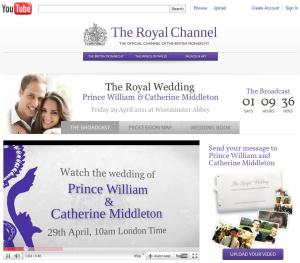
The Royal Family itself is getting with the times and announced that all coverage of the wedding will be on its very own YouTube channel. Coverage starts at 7pm Brisbane time!
https://ignitepr.com.au/wp-content/uploads/2013/10/Ignite-WebLogo011.png00igniteprhttps://ignitepr.com.au/wp-content/uploads/2013/10/Ignite-WebLogo011.pngignitepr2011-04-28 09:43:012013-12-26 00:02:14Jumping on the Royal Wedding bandwagon
‘Social media’ is still the marketing buzz phrase, but lots of companies still don’t know how to work with it and make it work for them. Here are a few things NOT to do.
1) Sell, sell, sell: social media is all about building relationships, getting referrals, having conversations with people on your wavelength. Use it as a PR tool, not for direct sales. It won’t work otherwise. If you don’t put out good content, there’s no value, so no one will be interested in what you have to say.
2) Join too many sites: it’s better to do one or two sites really well, than too many badly. Be strategic about which one(s) you choose then make the most of them. Make sure your profiles are always completed and updated regularly.
3) Be argumentative: it might get some attention in the short term, but think about the long term, who wants to listen to the moaning argumentative colleague in the office?
4) Take, take, take: social media is about relationships. Those involve give and take. Give advice, ideas, tips, information, thanks, etc, and you will get back. Constantly think about what value you are adding.
5) Don’t join any groups: social media is an online community, so that involves sharing information and expertise, so joining groups is a great way to contribute, sign post what you’re interested in, what discussions have authority to contribute to, where you can add value.
Finally, even though social media is what everyone’s talking about, good old face-to-face meetings and events are not to be sniffed at. They can be an excellent extension of social media. In fact, social media can be a great way to extend your offline network.
Share this post:
https://ignitepr.com.au/wp-content/uploads/2013/10/Ignite-WebLogo011.png00igniteprhttps://ignitepr.com.au/wp-content/uploads/2013/10/Ignite-WebLogo011.pngignitepr2011-04-27 16:31:392013-12-26 00:02:14How not to do social media
Ultimately, we recommend any executives who will be undertaking media interviews to undergo professional media training to hone key messages and delivery – it’s you and your company’s reputation on the line after all – but we thought it would be worth sharing just a few pointers to bear in mind if you’ve got a big interview coming up.
1) Meet deadlines: journalists are busy people and the story they are working on is the most important thing (to them) at that time, respect that by responding to requests in a timely manner, and when a big story breaks make sure you are available.
2) Preparation is key: never ever wing it. Always try and get a full brief on the questions that will be asked, have your key messages ready to go, try and actually practise an interview with a friend or colleague asking the tricky questions.
3) Know what you want to say: shape your message(s), work out what you want to say and how you can say it as simply as possible, always avoid jargon and don’t over complicate. Stay on track with your message(s) throughout the interview and learn how to bridge – i.e. when the question doesn’t necessarily cover what you want to say you can add your own extra bits. For example, “It’s important to remember that…”, “Before we get off that topic, let me just add…” etc. Try and think about two or three key ‘take-away’ points you want the journalist/ viewers/ readers to remember.
4) And how you want to say it: body language and eye contact are important, often (for television and radio) it’s not really what you say its how you say it.
5) Tell the truth: stick to the facts, distinguish between fact and opinion, if you don’t know the answer to something say so.
6) Take written information: reporters often need help putting an issue in perspective, so feel free to provide them with written information to highlight the key facts and figures.
7) Never say “No comment”: if you can’t answer something or choose not to, just give a brief explanation why otherwise it can be a little like a red rag to a bull.
8) Silence is golden: don’t talk to fill any silences, say what you want to say and then it’s the reporter’s responsibility to keep the interview going.
9) Nothing is 100% off the record: it’s worth remembering that a journalist is always on the lookout for the next big story, don’t let your ‘off the record’ comment become that; nothing is ever fully off the record.
10) Get performance reviews: everyone can get better so make sure you review resulting articles or the broadcast coverage and seek comments and feedback from friends and colleagues
Good luck!
Share this post:
https://ignitepr.com.au/wp-content/uploads/2013/10/Ignite-WebLogo011.png00igniteprhttps://ignitepr.com.au/wp-content/uploads/2013/10/Ignite-WebLogo011.pngignitepr2011-04-20 12:05:172013-12-26 00:02:14Top tips for media interviews
“I don’t have a creative bone in my body” is something we’ve heard a few times. Luckily not in the office, as being creative and having good ideas are all part of a PR professional’s role. But we believe that everyone can have great ideas, it just takes some facilitating in the form of a ‘brainstorm’ or ‘thought shower’ as the politically-correct police are calling it (apparently ‘brainstorm’ might affect epileptics).
Brainstorms are when a group of people gets together to come up with loads of ideas to solve a particular problem. The problem can be anything from “what can X company do next year to generate publicity?” to “what shall we call this event for client Y?” to “what new products can we develop?” – basically, anything. The aim of a brainstorm is to come up with as many different ideas as possible, some way out of leftfield, some things that have been tried before, and some that are just pure original brilliance, to come up with the best possible solution.
In PR and the marketing industry in general it’s important to think differently and come up with great ideas and new ways of doing things. We regularly brainstorm for clients and potential clients and even ourselves. But a word of warning, don’t just be creative for creative’s sake – the solution must be right for the problem and also the client. Here are our top five tips for effective brainstorming.
1) Establish an atmosphere for creativity
Select the room for the brainstorm, sometimes it’s good to get outside or away from the norm. Make sure it’s prepared and a relaxing place to be – play some music, have some refreshments available, make sure there are plenty of coloured pens and pencils, flip charts, sticky notes, paper, etc. Have any props you might need ready to hand. Ensure that it is decided beforehand who will document all the ideas – consider recording the brainstorm so that no ideas are lost. Make sure you have an agenda for the brainstorm and make sure you set a time limit from the outset so people know how long they need to commit to.
Consider doing some warm up exercises for five to ten minutes to create a more relaxed atmosphere and get people thinking laterally, for example:
Word association game: Everyone stand up in a circle facing inwards. Have a ball. The first person with the ball throws the ball to someone else in the circle whilst saying a word, e.g. carrot. The second person who receives the ball says a word that instantly comes into their head associated with the first person’s word, e.g. orange, whilst throwing the ball to the third person. And so on.
One word story-maker: Go round the group creating a story one word at a time, have signals that change the direction of the story, e.g. the story might be travelling clockwise round a group of people but by putting your hand up you can change the direction to be anti-clockwise. See whether you can actually create something coherent.
2) No idea is a bad idea – set the ground rules
If possible, give the participants the brief before the brainstorm so they can come with some ideas already. But make sure you just give an introduction to the problem, don’t plant any ideas to limit the thinking.
It’s important for the person chairing the brainstorm to establish the rules and manage the whole process, including reinforcing the rules.
BRAINSTORM RULES
Anything goes – don’t judge ideas, they can be possible solutions but they may also be something that stimulates another idea from someone else in the group, so no idea is a bad idea, every idea is equally important and valid
Encourage people to think as broadly and wildly as possible
It’s all about quantity not quality at this stage – you want as many ideas as possible
Encourage laughter and chat, but don’t allow criticism. And encourage everyone – don’t let one or two people dominate
Stay focused on the problem/ topic
3) Use different techniques
During the brainstorm you can just present people with the problem and get them to come up with ideas, but often there needs to be more structure to a session. There are many different tools and techniques to use.
Six thinking hats: Developed by physician, author and inventor Edward de Bono, this technique advocates that everyone has to think a particular way at the same time. There are six different ‘states’ of mind – the six thinking hats – that have been assigned a colour. Switching mind state can be done literally or metaphorically by switching hat colour.
WHITE
Information – what information do you know, what information do you need?
RED
Emotions – what’s your hunch or feeling about something (without justification)
BLACK
Bad points judgement – why might something not work, use logic to identify barriers to success
YELLOW
Good points judgement – why something will work, use logic to identify benefits, why something might work
GREEN
Creativity – what are the possibilities, the alternatives, follow thoughts to new ideas
BLUE
Thinking – manage your thinking
All of these thinking hats are supposed to help everyone in a particular thinking hat stage think more deeply. They present problems and solutions about the ideas you might come up with.
Opposites: what is the worst possible solution to the problem? If you can think of the worst outcome, this may facilitate thinking about the best!
Flash cards: you know the children’s ABC flash cards with a letter and a picture of something? Well they’re great for brainstorms. Take a card and associate whatever you see on there with the problem in hand.
Random words: similar to flash cards, take a random word or thing and try to associate it in as many different ways as possible to the problem.
Personas: encourage people to think as if they were a different person – come up with various different personas to make people think about a problem from someone else’s point of view. This is quite useful if you work in an office where the demographic is very similar and everyone is thinking of solutions from their own point of view, it can introduce new thoughts and difference perspectives.
Other things you can do are:
Split into smaller groups, give each group a flipchart to brainstorm, move to the next flipchart and brainstorm around the ideas on there
If people are initially nervous about sharing ideas verbally, get them to write ideas on sticky note
If you’re planning a long session, have a break-out room with snacks and refreshments for breaks
Give people yellow cards to put down if someone is being too critical and a grey card when ideas are becoming too boring or mundane
4) Define and refine
At the end of the brainstorm, if there’s time, go through all the ideas and get everyone to vote on the five best ideas that can then be further developed. Or split all ideas into three groups – ideas that can work immediately, ideas that may work in the future with further development, ideas that just don’t or won’t work. If there isn’t time, make sure you sit down after the brainstorm session to do this.
Also after each brainstorm make a note of what worked well and what you think could have been done differently so you can hone the process and techniques you use.
Once you’ve had your first brainstorm you always have more to combine, extend or develop ideas from the first one, it doesn’t always have to be about coming up with brand new ideas.
5) Look outside the box
When choosing people to attend a brainstorm don’t restrict yourself to people in your office, think about bring outsiders into the brainstorm. If possible, make selections on who comes according to their expertise and interests, throw in some people from different business areas or with different skillsets as this might throw up something new.
The more you brainstorm, the better you get, it should be part of every pitch or planning process or just everyday business to unearth new ideas and ways of doing things and reinvigorate brands and businesses. Enjoy!
Share this post:
https://ignitepr.com.au/wp-content/uploads/2013/10/Ignite-WebLogo011.png00igniteprhttps://ignitepr.com.au/wp-content/uploads/2013/10/Ignite-WebLogo011.pngignitepr2011-04-13 11:40:592013-12-26 00:02:14How to run a brilliant brainstorm
Let it be said that obviously all of our clients are wonderful to work with, but everyone has their ‘moments’ so we thought it would be a useful exercise to look at what clients can do to help their PR agencies so that time is being spent in the work that will get the best results possible.
Believe it or not, you play a crucial role in ensuring our success with your organisation. We will show enthusiasm and understanding for your business and listen to your daily pressures, but similarly in a perfect world there are certain criteria that go towards making the perfect client.
1) Let’s work as a team: don’t make it be you vs. us, we want to be part of your team, like an extension of your in-house department, so let’s work together like that. We might be able to bring a different perspective to the table as well, so use it. We want to be a partner, not just another supplier. We’ll need input from you as well; if you think we can work in silo you won’t get the best from the relationship
2) Trust us and listen to our advice: you hired us for our insights and expertise, so please listen to us. We might not always tell you what you want to hear, but we never said it was going to be easy.
3) Share and share alike: share your information with us as much as possible as early as possible, if we don’t know the full picture we can’t sell your stories.
4) Don’t set us up to fail: give us reasonable timeframes and reasonable budgets to allow us to do the best job possible and have realistic expectations of what can be achieved.
5) Appreciate the value of PR: you hired us so hopefully that means you have an understanding of PR and what it can achieve.
6) Give us time: it will take a while for us to establish relationships with you and your audiences, give us at least six months. If you’re not happy after that, then you need to have serious words with us.
7) Work out how you will determine success: work with us to come up with some measurable goals so we’ll both know whether something’s worked and has been a success, for example just because it’s a big media title doesn’t necessarily mean it’s the right one for your business, so, if you’ve told us who your audiences are, listen to us on that one.
8) Speak up: if you don’t like what we’re doing, at any point, tell us. We’d rather hear it and try and fix it than not know and have you suffer in silence or worse still, sack us.
9) Know what you want: the better the brief, the better the solution.
10) Make your mind up: if you must change your mind about something make sure you understand and appreciate the implications.
11) More work means more money: we’re a business too and much as we love you, we don’t work for free.
12) Pay us on time: slow payers get slow workers.
13) Give credit where it’s due: it’s nice to get a thank you.
And on the nitty gritty day-to-day stuff:
14) Appreciate deadlines: you have deadlines, we have deadlines, journalists have even tighter deadlines and generally if we don’t hit them we’ll miss the opportunity.
15) Be prepared: if you’ve got an interview and we’ve given you briefing notes, please read them.
16) Know the value of a good picture: good photography is very important; it can make or break a story.
17) Understand the bigger picture: you or your product aren’t always going to be the main event, there’s a lot of news and competing information out there.
18) You might need to wait for coverage: we’re pitching to long lead and short lead media, stories might not appear straight away.
19) Be available: if a story is breaking, make sure you’re available should journalists need to talk to you.
20) Have a laugh: everything’s much better when you have a laugh with us.
Obviously no-one’s perfect, but hopefully the above points have given some food for thought. Do you agree with us?
Share this post:
https://ignitepr.com.au/wp-content/uploads/2013/10/Ignite-WebLogo011.png00igniteprhttps://ignitepr.com.au/wp-content/uploads/2013/10/Ignite-WebLogo011.pngignitepr2011-03-30 13:26:412013-12-26 00:02:14How to be the perfect client