Tag Archive for: Social Media

Media Storm of the Month – May 2011

By the time you read this, the media phenomenon that is ‘planking’ will have gone the way of Y2K, Napster and Rebecca Black – relegated to the scrapheap of dull irrelevant news from yesteryear.

But if you can cast your mind right back to the beginning of the month, you might recall the social media driven pastime was hitting the news in a big way, especially after the tragic death of an intoxicated Brisbane planker.

Fairfax papers had plenty to say after the incident:

It was a harmless craze just four days ago. Kerri-Anne Kennerley opened her television talk show lying balanced, face-down, on the back of a couch. Karl Stefanovic was lying flat on the Today show desk in front of the cameras.

But early yesterday morning, the ”planking” fad sweeping social networking sites proved fatal. Acton Beale, 20, was positioning himself on a balcony railing seven storeys up in Brisbane when he lost his footing and plunged to his death in the car park below.

Calls to ban the fad came thick and fast. News Limited described the phenomenon as “spreading like a virus around the world” and conservative commentators derided the youth of today and called for reinstated compulsory national service to give Gen Y something constructive to do.

So what gave the planking craze such strong media kudos? Sure 130,000 odd people ‘liked’ the Planking Australia page on Facebook. So what? More than four million people ‘like’ the page for chocolate chip cookies, but you don’t see Karl gorging himself on biscuits on Today, nor do we hear about the “cookie eating plague sweeping the globe”.

The answer comes down to a couple of simple journalistic rules known as news values.

The idea goes that any potential news item can be assessed for newsworthiness based on six or seven key criteria.

These are often defined as impact, timeliness, prominence, proximity, bizarreness, conflict and currency, or some combination of these.

Unfortunately for all of us, planking ticks a couple of these boxes with a big red felt pen.

First is impact. The story ‘grew legs and ran’ after the first death associated with the craze. This was made doubly appetising for media due to two extra factors.

1)      The man who died was a young person, i.e. under 30, and;

2)      The man who died was under the influence of alcohol at the time (Australia’s binge drinking culture is another hot media topic).

This brings us to the second key media value that planking satisfies perfectly: currency.

The rapid rise of social media has sparked an insatiable news appetite for the phenomenon. This means stories that might be insignificant on their own, for example bullying, infidelity or petty crimes, are given extra exposure whenever the issue is linked to social media platforms like Facebook and Twitter.

Don’t believe me? Consider how often you hear media reports concerning cyber-bullying compared with plain old garden variety harassment.

News values drive all news coverage and this often leads to criticism of media for ‘sexing up’ some trends far beyond what is warranted, while completely ignoring others which don’t fit the necessary criteria.

So, if you found yourself drowning in the sea of planking stories in May, hopefully now you understand a little more about why.

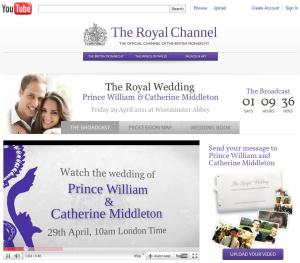
Jumping on the Royal Wedding bandwagon

As a Brit, I’m actually quite excited about the forthcoming nuptials of William Wales and Catherine Middleton AKA Wills and Kate; mostly because I want to see what she and the lady guests will be wearing. The media frenzy since their engagement was announced last November has been incredible. I can only imagine what it’s like back in the UK having been out in Australia since February, but even out here it’s huge. All the main TV channels have sent their key presenters over to London to cover the ceremony and everything they can possibly think of before and afterwards. A lot of people can be forgiven for getting ‘Royal Wedding fatigue’ before it’s even happened, but there have been a few companies, brands and quirky products that have caught my eye and shown that, with a bit of clever creative thinking, it’s still possible to stand out in a crowded arena.

1)      T-Mobile

Known for their ‘flash mob’ style adverts, which have caused surprises and smiles in places such as London’s Liverpool Street station and Heathrow Airport’s Terminal 5, the mobile phone company created a spoof video of the Royal Wedding party dancing down the aisle. The video went viral, got a lot of media coverage, especially in the UK, and created a lot of positive sentiment for the company and its ‘life’s for sharing’ strapline.

2)      Legoland

A theme park in Windsor, UK, based around the popular children’s toy, Legoland decided to stage its own Royal Wedding outside its model of Buckingham Palace. Brilliant product placement and a great way to show the versatility and humour of the brand, it also manages to get in messages in the media coverage about its 15th anniversary and opening times.

3)      William Hill

Well-known UK bookmaker William Hill released its Royal Wedding odds earlier this week. It has actually been keeping the media updated with the odds on various different circumstances to do with the wedding long before they actually announced their engagement. What makes the story stand out is the obscure things they’ve managed to give odds for (and getting an exclusive with the BBC, which is quite strict in its promotion of brands). Odds on Wills being stood up at the altar? 100-1. What colour will the bride’s dress be? What will they be eating? What will the first song be? Which celebrity will be the first to arrive on the BBC’s coverage? Other bookies Ladbrokes and Paddy Power have also got in on the act. They’ll be taking bets on pretty much anything!

4)      KaTEA

It’s stupid but it made me laugh – a German company ‘Donkey Products’ managed to get worldwide coverage for its ‘KaTEA and William’ teabags, which make the Royal couple look like their having a bath in your tea cup.

5)      The Royal Family

The Royal Family itself is getting with the times and announced that all coverage of the wedding will be on its very own YouTube channel. Coverage starts at 7pm Brisbane time!

And finally, it’s a friend of a friend but this spoof music video of ‘K Mid’ rapping about her 99 Problems is ‘totes’ worth a watch!

How not to do social media

‘Social media’ is still the marketing buzz phrase, but lots of companies still don’t know how to work with it and make it work for them. Here are a few things NOT to do.

1)      Sell, sell, sell: social media is all about building relationships, getting referrals, having conversations with people on your wavelength. Use it as a PR tool, not for direct sales. It won’t work otherwise. If you don’t put out good content, there’s no value, so no one will be interested in what you have to say.

2)      Join too many sites: it’s better to do one or two sites really well, than too many badly. Be strategic about which one(s) you choose then make the most of them. Make sure your profiles are always completed and updated regularly.

3)      Be argumentative: it might get some attention in the short term, but think about the long term, who wants to listen to the moaning argumentative colleague in the office?

4)      Take, take, take: social media is about relationships. Those involve give and take. Give advice, ideas, tips, information, thanks, etc, and you will get back. Constantly think about what value you are adding.

5)      Don’t join any groups: social media is an online community, so that involves sharing information and expertise, so joining groups is a great way to contribute, sign post what you’re interested in, what discussions have authority to contribute to, where you can add value.

Finally, even though social media is what everyone’s talking about, good old face-to-face meetings and events are not to be sniffed at. They can be an excellent extension of social media. In fact, social media can be a great way to extend your offline network.

Share this post: Add to FaceBookAdd to StumbleUponAdd to Twitter

Media Storm of the Month – March 2011

This is a new regular blog-slot where we look at a news story that has taken off in that month.

March has been awash with controversy and genuine news, from the aftermath of the Christchurch quake to the even more tragic Japanese earthquake and its resulting tsunami, rising death toll and imminent nuclear meltdown. Not to mention the  scandal in the AFL with player manager Ricky Nixon and allegations of misconduct with a 17 year old girl, to Charlie Sheen’s outrageous public outbursts and increasingly weird behaviour to the prospect of war with Libya and more floods in Queensland and New South Wales.

The story we’re going to touch on as a Media storm of the Month though is the story about the YouTube video of the Year 10 Sydney student being bullied by a Year 7 boy. The story broke around the time of the National Day of Action against Bullying and Violence. A video was posted online of a much smaller boy punching another boy in the face and body; after several rounds the larger child suddenly retaliates, lifting the smaller boy off the ground and smashing him into the ground and leaving him to stagger off.

Daily Mail grab: http://www.dailymail.co.uk/news/article-1368886/Bully-bodyslammed-Casey-Punisher-says-s-sorry-blames-victim.html

Something that should have been sorted out by the school, the boy’s parents and the boys themselves has, thanks to the huge popularity and growth in social media and online networking sites, grown out of all proportion.

There was media outrage at the video and the attack and we now know that the larger Year 10 boy is 15 year old Casey Heynes, who has been bullied most of his school life and considered committing suicide last year, and the bully is 12 year old Ritchard Gale.

Both boys are now part of a media circus with interviews on major TV networks and coverage in all the main newspapers.

It has aired some interesting points and, it can’t be denied, was ‘good timing’ for a national bulling campaign. It has sparked a debate about bullying and violence in schools making other children affected not feel alone. Anti-bullying and children’s help charities such as Headspace, BeyondBlue and Kids helpline have all been able to jump on the bandwagon getting out their messages and contact details for all the other children who might be in need.

But the talk is also about what is it right to do to stand up for yourself? Casey had obviously been provoked and bullied for a long time, but was it right for him to retaliate with such force?

And how about the boy who filmed the whole incident on his mobile phone, shouldn’t he have been reprimanded as well? Should mobile phones be banned from schools all together? What can we do about this apparent rise in ‘cyber’ bullying?

But also, do children need to be protected from the media and journalists? In their desperate quest for ‘exclusives’ and ‘scoops’ the television news shows particularly escalated the issue and have effectively given credence to a schoolboy disagreement by asking ridiculous questions and adding weight to immature thoughts and feelings. Channel 9 even apparently showed Channel 7 interview coverage and claimed it as its own. A story about a schoolboy fight provoking a media battle, what is the media world coming to?

Going places… understanding Location-based Services and Geo-tagging in social media

 Social media continues to get bigger and new ways to use the medium are being introduced at a rapid rate.

 In this blog we are going to take a look at (and explain) social media location based services, geo-tagging and the potential these applications have for building brands.

Location-based Services (LBS)

A Location-based Service (LBS) is an information and entertainment application that can be accessed from a smartphone or mobile device. These services are growing in popularity with businesses increasingly using LBS to generate leads and enhance brand awareness.

Geo-tagging

Geo-tagging is a tool that utilises Global Positioning Systems (GPS) in smartphones to assist users to identify a particular place or location. It is used at a local and global level to enable promotion of real-time activities, merchants or locations through social media sites including Twitter and Facebook. Recently geo-tagging has been touted as the next big thing in the social media space.

 Who currently uses Geo-tagging? Anyone who has a smart phone with GPS or has access to the internet and associated social media sites can use geo-tagging. Consumers are using it to let friends know where they are and to get special offers and deals from retailers etc. It is used in gaming applications such as Foursquare, MyTown and Gowalla.

 Businesses are using geo-tagging to offer real-time  promotions or specials and to increase brand awareness.

 FOURSQUARE

What is it?

Foursquare is a location based social network application that incorporates gaming features.

Foursquare defines itself as ‘a mobile application that makes cities easier to use and more interesting to explore. It is a friend-finder, a social city guide and a game that challenges users to experience new things, and rewards them for doing so.’

Foursquare lets users “check in” to a place when they’re there, tell friends where they are and track the history of where they’ve been and who they’ve been there with.

In operation: March 11, 2009

Current number of consumer users: As of August 2010, Foursquare had 3million users worldwide.

Current number of registered users for business: Approximately 15,000

Quick breakdown: Foursquare is a game where users compete for points to win the status of being the ‘mayor’ of a location. It’s a good application for retail businesses as you can incorporate offers and help build customer loyalty

Cost: $0 to join or register a business. Cost of developing an application for a business varies

Best use by a brand we’ve seen so far: Starbucks Coffee

Our verdict: Claim your business name/place now, worth investigating if you have an extensive number of stores and targeting younger generation

FACEBOOK PLACES

What is it?

A location based application for Facebook users that allows users to check themselves or others in from a smartphone

In operation:  August, 2010

Current number of users: Approximately 30 percent of 500 million Facebook users but growing every day

Quick breakdown: Facebook Places allows users to check themselves into locations or places. It also allows friends to check other friends into locations as well. Easy to add locations and incorporate into Facebook business pages.

Cost: $0 for consumers. Businesses can register their location Facebook for free but you will need a business page first.

Best use of a brand we’ve seen: Too early to have any big players – but any business who is already heavily involved in Facebook and has multiple locations will be well placed to take advantage of Places as it grows.

Our verdict: Still in the early stages however, sure to grow with the popularity of Facebook. If businesses start offering incentives and offers to users to ‘check in’ (similar to the Foursquare model) it will gain popularity.

Places is also good for increasing brand awareness and connecting with Facebook users in real time. When people check into areas nearby to your business your listing comes up automatically.

GOWALLA

What is it?

Gowalla is a mobile and web service that gives people a new way to communicate and express themselves through the everyday places and extraordinary settings they enjoy.

Gowalla definition: ‘People can capture and share their spot in the world with friends and family, while discovering new places, events and trips as they go. Gowalla offers businesses, campaigns, and organisations the unique opportunity to reward loyalty, reach new consumers, and to create memorable experiences.’

In operation: March 13, 2009

Current number of users: 340,000

Quick breakdown: Gaming application (similiar to Foursquare) except it is built around obtaining stamps in a virtual passport – global. Users can accumulate points, rewards, discounts and badges. Businesses pay for a service to have their store listed or featured on Gowalla.

Cost: Free for consumers, businesses can get a featured listing from $155 US per day.

Best use of a brand we’ve seen: CNN Money for content distribution

Our verdict: Declining popularity compared to Foursquare, too niche market.

Connecting with your social media community

With the continuing evolution of the social media sphere, we are finding more and more clients are looking towards social media networks to generate leads and raise awareness about their brand.

However, the way most companies are approaching social media is fast and furious.

You can rush things through to catch up with everyone else but if you haven’t thought your approach through properly you won’t get the desired results.

For some this topic might seem a bit ‘101’ Social Media but we continue to come across businesses that don’t really understand how it works and the power it possesses in influencing a brand positively or negatively.

Social media is a real-time medium that has to be approached differently to other mass-advertising channels. Social media networks are more about the ‘soft sell’ rather than the hard sell – no-one likes being sent hundreds of spam emails or receiving unsolicited telemarketing calls – and your social media community is the same. Blatant advertising material on social media channels is unacceptable as most people have joined for a bit of fun. The exception to this is when it is a specific promotion page and people are aware of this when they sign/ join up/follow.

With this in mind, it is important to have clear objectives for why you want your brand or business to engage in social media. Is your target market reached easily via this channel? It’s not good enough just to be ‘on’ it.

Brands can benefit  from building genuine connections with the market on social media but it needs to be consistent with the overall marketing strategy, which includes integrating above and below the line elements. Social  media requires a a long-term commitment but there are a few things you can do to engage fans quickly and easily. Simple things like asking questions or running specific online promotions through applications are two strategies that encourage engagement.

Roger Federer is one of the biggest sports brands in tennis (and sport in general). Part of the reason he continues to remain popular with both sponsors and fans is through his innovative approach to social media. Roger and his team consistently put in efforts to connect with his Facebook & YouTube fans and this has paid off with his number of Facebook fans recently hitting 4, 811, 836. His comments and videos regularly attract feedback in the thousands. I am sure many of you are aware of his recent video for Gillette, which went viral on the internet

The screen capture below is a great example of a recent post he made calling  for fans to ask him any questions they would like answered. Note: this one post attracted 9, 261 comments and 13, 9223 ‘likes’ – one of his less popular ones!

'The Fed' is a social media ace

 You will notice it actually seems like Roger himself is using this page – it is not all marketing material and this is a key element in its success as a fan page.

As a business owner it’s important to start with the end goal in mind so before doing anything consider what you really want to achieve in the social media sphere then act accordingly. Do research, check what competitors are doing and ensure you are familiar with social media tools so you can truly understand how it works and can be applied for your business.

If your business is already engaging in social media, assess how successful it is and  make sure there are consistent efforts to engage and connect with the online community.

Social media is a powerful communication tool but it is not a one size fits all medium.

Navigating the murky waters of professional PR measurement

In 2010, we’re utterly obsessed with measurement. This obsession hasn’t been a quantum shift, a grand epiphany, or a light bulb moment, it’s been a slow build, a snowball culminating with the global financial crisis.

Today business owners must be able to produce proof at a moment’s notice to substantiate any spend.

Gone are the ‘good’ old days when a crisp suit, lunch on the agency and the whisper of expensive cologne were enough to reassure clients of campaign success (think Madmen).

Today, we’re pay-per-click, we’re analytics, we’re tangible results, we’re figures, reports and metrics, except of course when it comes to professional public relations. The reason for this is a fundamental lack of any uniform measurement platform for PR and marketing agencies in Australia to use, by which all can be judged.

The fact that such a system remains nonexistent in 2010 almost beggars belief.

The elephant in the room is highlighted all the more by PR agencies who flout this lack of regulation by presenting clients with reports boasting hundreds of thousands, or even millions of dollars worth of positive PR. These often ludicrous figures are reached by a not-so-clever multiplication of AVE figures.

AVE, meaning Advertising Value Equivalent is the closest thing PR and marketing agencies have to adequate measurement tools. AVE is calculated by PR professionals literally sitting down with media clippings, a ruler and a calculator and determining the size of any given media clipping. Based on the size we are able to establish what the equivalent advertising price for the space would be.

But here’s where it gets messy. Some agencies will then add a multiplier to the total value, on the assumption that editorial is more credible than advertising. Many agencies consider 3 times AVE to be acceptable, however some use 5 times AVE or, heaven forbid, even more.

It may be partly due to these measurement disparities that the Public Relations Institute of Australia actually discourages the use of AVE figures and also states in its code of ethics:

‘Members shall refrain from proposing or agreeing that their consultancy fees or other remuneration be contingent entirely on the achievement of specified results’.

However, like it or not, clients are increasingly asking for these figures and agencies which refuse to produce them may be seen as disreputable.

Recently the director of a large Sydney agency told us she was now being asked for AVE figures by clients for the first time, even though the practice has been commonplace in Queensland (at least for our agency) for many years.

So here’s the punch: When two different agencies can deliver the same level of media coverage, but value this coverage wildly differently, how can clients adequately compare ‘apples with apples’ when it comes to PR?

The establishment of a viable evaluation platform for professional public relations and marketing, which is accepted by a majority of service providers and backed by the PRIA, is one of the most vital steps in the maturation of the industry in Australia.

Agencies who consistently deliver strong results for their clients will welcome this new age of measurement and transparency.

Tweeting away the day @ work?

A contact I follow on twitter recently notched up their 10,000th tweet.

Fantastic, I thought, I wonder how long they’ve been tweeting? Well turns out they have only been a user since February 2009. In a flash of calculator driven mathematics not seen since high school I suddenly found myself furiously bashing out statistics.

1,111 tweets per month, I said to myself aloud, 37 tweets per day.

Now here’s where it gets interesting.  Let’s assume they sleep for an average of six hours per night, (The Australian average is seven to eight hours) and let’s also assume they don’t sleep-tweet. If both these assertions are true, then during waking hours they tweet twice an hour, every hour, every day! Calculating to 40 minutes a week on Twitter and this does not account for time spent reading tweets.

This lead me to consider how much tweeting is too much? The fact I ponder this question may have some crying – ‘You don’t understand the benefits of social media, you haven’t watched the latest digital webinar podcast, you obviously didn’t attend the last social media marketing drinks on your boss’ time!’

Alas you are mistaken.  I’m a 25 year old gen Y and social media addict. Hell, I even watch the odd webinar!

So what’s the point? Simply this: If we as marketing, media and communications professionals are going to continue zapping large chunks of work time on Twitter, perhaps we ought to give some consideration to our posts.

Open up the conversation

Twitter is awash with marketing and communications professionals talking to other marketing and communications professionals about marketing and communications. Is there someone else on Twitter you would like to be talking to? If the answer is yes, what do you need to say to engage them?

Engage more

I have seen it many times where some Tweeter will ask for feedback on a topic, recommendations for products, or ask some relevant poignant question only to receive minimal response. Why? Where is all the ‘engagement’ that is so imperative to making social media work?

Consider your content

There’s little merit in grandstanding about the amazing benefits of social media if your tweets are limited to insightful gems like ‘Just ate bacon and eggs for breakky’ or ‘taking the dog for a walk now’. Just like the real world, the most effective methods for opening communication channels are sharing interesting or relevant information and asking questions.

Don’t over retweet

It’s annoying when someone in the office re-sends that funny email which everyone has already seen right? The same applies to re-tweets. If it’s all over Twitter, does it need your RT?

Change the subject

Do any of us really need to read another blog about social media? (oh the irony) There’s so much amazing content which doesn’t make its way to the Twittersphere. Be original, informative and entertaining with the links you post and stand out from the crowd!

– Joseph Keller, Account Manager